Author name: Rahul Rathore

blog

The Rise of Weekend Experience Marketing in Delhi NCR

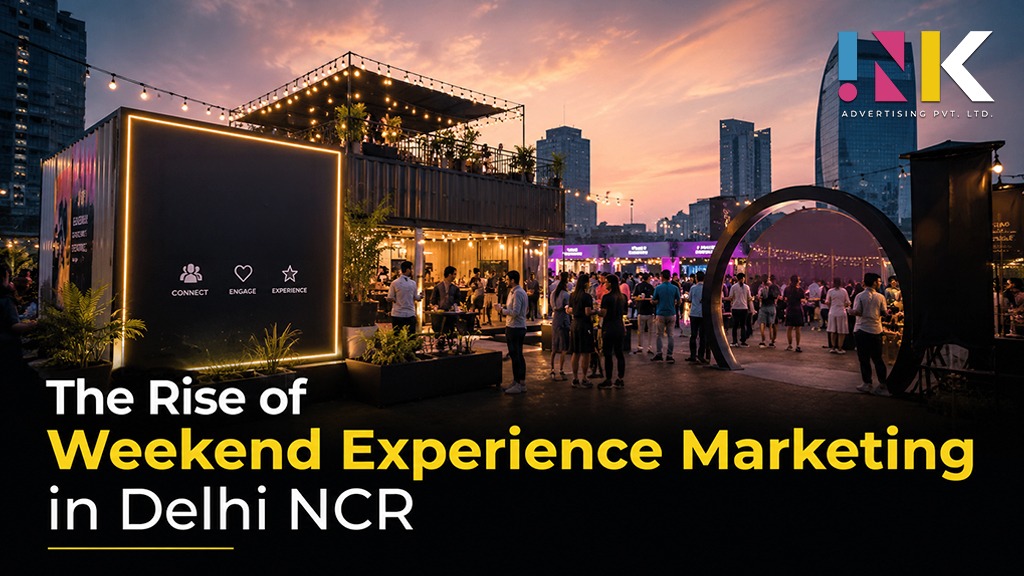
Weekends have always attracted larger crowds, but today they represent something far more valuable than increased footfall. They have become an opportunity for brands to engage with consumers when they are relaxed, socially active, and more willing to participate in meaningful experiences. Across Delhi NCR, Saturdays and Sundays are no longer reserved only for shopping or leisure. They have become the preferred time for product launches, interactive brand activations, lifestyle events, pop up experiences, and community driven campaigns. This shift has led to the rapid rise of weekend experience marketing, a strategy that focuses on creating memorable interactions rather than relying solely on traditional advertising. Instead of simply reaching audiences through billboards or digital ads, brands are creating environments where consumers can experience, interact with, and remember them. For businesses competing in an increasingly crowded marketplace, this approach is helping bridge the gap between awareness and genuine customer engagement. What is Weekend Experience Marketing? Weekend experience marketing is an extension of experiential marketing that specifically leverages high consumer activity during weekends to create stronger brand engagement. Rather than communicating through one way advertising, brands invite consumers to participate. This may include product demonstrations, immersive installations, interactive games, live entertainment, workshops, sampling campaigns, or community events designed around the audience’s interests. The objective is not simply to generate visibility but to create experiences that people associate with the brand long after the event has ended. Unlike traditional campaigns where impressions are often measured through reach alone, experiential campaigns focus on interaction, participation, conversations, and emotional connection, making them particularly effective in today’s consumer landscape. Why Weekends Have Become Prime Marketing Real Estate Consumer behaviour changes significantly over the weekend. People have more discretionary time, are generally accompanied by family or friends, and are more open to exploring new places, products, and activities. Shopping malls witness higher footfall, entertainment venues become busier, public events attract larger audiences, and community spaces come alive with cultural and recreational activities. For marketers, this creates a rare opportunity to engage consumers in an environment where attention is naturally higher and interactions are less transactional. Instead of interrupting someone’s day with an advertisement, brands become part of their outing. This subtle shift often results in stronger recall and more meaningful engagement. The Changing Consumer Mindset Today’s consumers expect more from brands than promotional messages. They want authenticity, participation, and experiences that feel relevant to their lifestyle. Whether it is trying a new product through a live demonstration, participating in an interactive challenge, or engaging with an installation designed for social sharing, people are more likely to remember brands that make them feel involved. This is particularly evident among Millennials and Gen Z audiences, who actively seek experiences they can share with their social circles both offline and online. However, the appeal extends beyond younger demographics. Families, professionals, and senior citizens also appreciate well planned events that provide entertainment, convenience, or useful information. As expectations evolve, successful campaigns are shifting from broadcasting messages to creating moments that encourage participation. Where Weekend Experience Marketing Comes to Life One of the biggest strengths of weekend experience marketing is its versatility. Almost every industry can benefit from engaging consumers in environments where they are already spending their free time. Shopping Malls and Retail Centres Malls remain one of the most popular destinations for weekend footfall. Interactive kiosks, product launches, fashion showcases, seasonal displays, and sampling activities help brands connect with consumers who are already in a discovery mindset. Lifestyle and Entertainment Destinations Water parks, amusement parks, gaming arenas, cinemas, and entertainment hubs offer brands opportunities to integrate naturally into enjoyable experiences. Campaigns in these environments often generate high engagement because visitors are already emotionally invested in the outing. Festivals and Community Events Food festivals, music concerts, cultural celebrations, flea markets, marathons, and neighbourhood events allow brands to interact with audiences in a relaxed and vibrant atmosphere. These events often attract diverse demographics, making them suitable for both mass market and niche campaigns. Educational Institutions and Corporate Campuses College festivals, university events, corporate parks, and business campuses provide targeted environments for industries such as technology, education, finance, recruitment, healthcare, and consumer products. Weekend activations in these spaces help brands connect with clearly defined audiences while encouraging meaningful interactions. Experience Marketing Works Best When Digital Supports It An on ground activation should never exist in isolation. The most successful campaigns combine physical experiences with digital amplification before, during, and after the event. Before the activation, brands create anticipation through teaser campaigns, influencer collaborations, paid advertising, and event registrations. During the event, live content, branded hashtags, contests, and real time updates extend the campaign’s reach beyond those physically present. After the event, photographs, videos, testimonials, and user generated content continue to generate engagement while reinforcing brand recall. This integrated approach allows a single weekend activation to deliver value long after the event concludes. Measuring Success Beyond Footfall One of the biggest misconceptions about experiential marketing is that its success is measured only by attendance. While visitor numbers remain important, modern campaigns are evaluated using a much broader set of performance indicators. These may include audience engagement, dwell time, product interactions, qualified lead generation, QR code scans, social media reach, content shares, brand mentions, customer feedback, and post campaign conversions. When integrated with digital analytics, weekend experience marketing provides brands with measurable insights that help optimise future campaigns and demonstrate return on investment. Why Strategic Planning Makes the Difference A successful activation is rarely the result of a single creative idea. It requires careful planning, audience research, location analysis, permissions, logistics, technology integration, staffing, branding, and performance tracking. Every touchpoint influences how consumers perceive the brand. From the first interaction to the final follow up, consistency plays a crucial role in shaping the overall experience. This is where partnering with an experienced marketing agency becomes valuable. An integrated approach ensures that strategy, creativity, execution, media planning, and post campaign analysis work together to achieve defined business objectives rather than simply delivering an event. How

blog

What Makes a Full Service Advertising Agency Different?

In today’s competitive business environment, brands are fighting for more than just market share. They are competing for attention, trust, engagement, and long term loyalty. Consumers interact with brands through multiple touchpoints every day, from social media and Google searches to newspapers, billboards, events, radio, and television. Yet many businesses continue to manage these channels separately. One agency handles social media, another designs creatives, a third manages outdoor advertising, while internal teams coordinate everything else. While this approach may appear practical, it often leads to inconsistent messaging, slower execution, and inefficient marketing spend. This is where a full service advertising agency creates a meaningful advantage. A full service advertising agency does not simply offer multiple services. It brings strategy, creativity, media planning, digital marketing, and brand communication together under one roof, ensuring every marketing effort works toward a common business objective. Understanding the Full Service Advertising Agency Model A full service advertising agency is a marketing partner that manages branding, creative development, digital marketing, media planning, public relations, outdoor advertising, events, and campaign execution through a unified strategy. Instead of treating marketing channels as separate activities, a full service agency views them as interconnected parts of a larger customer journey. The modern consumer rarely makes a purchase decision after a single interaction. They may first discover a brand through Instagram, later see a billboard during their commute, search for the company on Google, visit the website, and finally convert after seeing a remarketing advertisement. When these touchpoints are managed independently, opportunities are often lost. A full service agency ensures every interaction reinforces the same message and brand experience. Why Businesses Are Moving Away from Multiple Vendors As businesses grow, managing multiple marketing partners becomes increasingly complex. Every vendor has its own priorities, timelines, reporting systems, and interpretation of the brand. This often creates challenges that directly impact campaign performance. Inconsistent Brand Messaging One of the most common problems is inconsistency. A brand may present itself one way on social media, another way in print advertisements, and entirely differently on its website. Customers notice these inconsistencies, which can weaken trust and brand recall. Strong brands are built through repetition and consistency. Whether customers encounter your business online or offline, they should experience the same personality, visual identity, and value proposition. Slower Campaign Execution Coordinating between multiple agencies can significantly delay campaign launches. Creative approvals move back and forth, communication gaps emerge, and important market opportunities may be missed. In fast moving industries such as real estate, hospitality, retail, and entertainment, delays can directly impact revenue. Difficult Performance Tracking When different agencies manage different channels, understanding what is actually driving results becomes difficult. Businesses often struggle to connect branding efforts with lead generation, customer acquisition, and overall return on investment. A unified approach provides greater visibility and accountability across the entire marketing ecosystem. The Power of Integrated Marketing The biggest strength of a full service advertising agency lies in integration. Rather than treating digital, print, outdoor, radio, and event marketing as separate activities, an integrated strategy ensures each channel supports the others. Consider a real estate project launch. A successful campaign may include: Google and Meta lead generation campaigns Site branding and outdoor media Newspaper advertising Influencer collaborations Landing page development Event promotion and launch activations Remarketing campaigns When these activities are planned together, the customer experiences a consistent message throughout their journey. This improves brand recall, increases trust, and often results in better conversion rates. Integrated marketing is no longer a competitive advantage. It has become a necessity for brands that want to remain visible in a crowded marketplace. Why Full Service Agencies Deliver Better ROI Marketing budgets are under greater scrutiny than ever before. Business owners and marketing leaders want measurable outcomes, not just creative outputs. A full service agency improves efficiency because every marketing activity is aligned with a common objective. Instead of running isolated campaigns, resources are allocated strategically across channels based on audience behavior, campaign goals, and performance data. This often results in: Better budget utilization Stronger brand recall Improved lead quality Faster campaign deployment More accurate performance measurement The result is not simply more marketing activity. It is more effective marketing activity. Beyond Advertising: Building Long Term Brand Equity Advertising generates visibility, but brand equity creates sustainable growth. Many businesses focus heavily on short term lead generation while overlooking long term brand building. A strong full service agency balances both objectives. This involves understanding consumer behavior, market trends, competitive positioning, and customer expectations. Rather than creating campaigns in isolation, the agency develops a larger brand narrative that can evolve over time. Brands that invest consistently in their identity, messaging, and customer experience often enjoy higher trust, stronger customer retention, and lower acquisition costs in the long run. This is why the best agencies function as strategic advisors rather than just service providers. Creative Consistency Across Every Platform Creative consistency is one of the most overlooked drivers of marketing success. A consumer may encounter a brand across ten or more touchpoints before making a decision. If every interaction feels disconnected, the impact of the campaign is diluted. Consistency does not mean using identical content everywhere. It means maintaining a recognizable voice, visual language, and brand personality while adapting the message for different audiences and platforms. Whether it is a social media post, a newspaper advertisement, a radio spot, or an outdoor campaign, every piece of communication should contribute to the same brand story. This consistency strengthens recognition and helps businesses stay top of mind. How INK Advertising Pvt. Ltd. Delivers Integrated Marketing Solutions At INK Advertising Pvt. Ltd., the full service approach is built around integration rather than individual services. Over the years, businesses across sectors have increasingly recognized the need for a single marketing partner capable of managing both digital and traditional media. This is particularly important in industries where customer decisions are influenced by multiple touchpoints. Our approach combines: Digital marketing and performance advertising Creative design and branding Print media planning Outdoor advertising Radio

blog

Why SEO Is a Long Term Investment for Businesses

In today’s digital environment, businesses are constantly searching for faster visibility, instant leads, and stronger online engagement. Paid advertising often becomes the first choice because it delivers immediate reach and traffic. However, the moment campaigns stop, that visibility also starts disappearing. Search Engine Optimization works very differently. SEO is not designed for overnight success or temporary spikes in traffic. It is built to create long term digital growth, sustainable online visibility, and consistent organic discovery that continues benefiting businesses over time. While paid campaigns can help brands gain immediate attention, SEO helps businesses establish authority and remain visible even beyond active advertising periods. At INK Advertising Pvt. Ltd., we often see businesses heavily focused on short term marketing goals while overlooking the long term value of search visibility. In reality, SEO is one of the most important digital investments a brand can make because it strengthens online presence gradually and compounds results over time. Modern Consumer Behavior Starts With Search   The way customers discover products and services has changed completely in recent years. Before making a purchase, inquiry, or booking, people now search online to compare options, research brands, check reviews, and gather information. Whether someone is searching for a real estate project, a school, a restaurant, a law college, or a digital marketing agency, the journey usually begins on Google. This shift has made search visibility extremely important for businesses across industries. Most users rarely move beyond the first few search results. Brands appearing prominently in search engines naturally receive higher attention, stronger credibility, and greater trust compared to businesses that are difficult to discover online. In highly competitive markets like Delhi NCR and Hyderabad, digital visibility often influences customer perception even before direct interaction begins. SEO helps businesses position themselves exactly where audiences are actively searching. SEO Creates Sustainable Organic Visibility Paid advertising can deliver immediate traffic, but that visibility lasts only while campaign budgets remain active. SEO focuses on building long term discoverability through organic rankings that continue generating traffic consistently over time. This is what makes SEO a compounding investment instead of a temporary promotional activity. When businesses consistently optimize their websites and publish informative content, multiple pages begin ranking for different search terms. Over time, this increases overall digital visibility and allows brands to attract audiences naturally through search engines. Unlike short lived campaigns that disappear once spending stops, SEO builds a digital foundation that continues supporting growth month after month. Businesses that invest in SEO early often gain stronger long term advantages because search authority develops gradually through consistency, relevance, and user engagement. SEO Is Much More Than Keywords Many businesses still assume SEO simply means inserting keywords into website content. Modern SEO is far more strategic and experience driven. Search engines today evaluate several factors before ranking websites, including content quality, user experience, mobile responsiveness, website speed, technical structure, and audience engagement. This means businesses need a well planned digital ecosystem instead of isolated optimization efforts. A strong SEO strategy usually includes website optimization, technical improvements, search intent focused content, internal linking, local SEO, and user experience enhancements that help audiences navigate information easily. Search intent has become especially important because Google now prioritizes content that genuinely answers user queries. Businesses focusing only on rankings without improving website quality or content relevance often struggle to sustain long term results. Content Marketing Drives Long Term SEO Growth One of the strongest reasons SEO creates lasting value is content. Every informative blog, service page, location page, or educational article creates another opportunity for businesses to appear in search results. Valuable content allows brands to answer audience questions, improve discoverability, and strengthen industry authority over time. At INK Advertising Pvt. Ltd., we believe content should feel informative and humanized rather than written only for algorithms. Modern audiences engage more with content that provides clarity, relevance, and practical value. This shift is also reflected in how search engines evaluate websites today. Content that genuinely helps users tends to perform better than heavily optimized but low value pages. Informative articles discussing industry trends, investment insights, digital strategies, educational topics, or customer concerns help businesses remain visible during the audience research journey. Even when users do not convert immediately, repeated visibility creates familiarity and trust over time. Local SEO Has Become Critical for Regional Businesses Digital transformation has significantly changed how people discover local businesses in India. Customers now search using highly specific terms related to services and locations. Searches like “best marketing agency in Delhi NCR” or “schools in Gurugram” reflect how localized search behavior has become. Mobile first users especially rely on quick Google searches before making inquiries or visiting businesses physically. Because of this, local SEO has become extremely important for regional businesses. Optimizing Google Business Profiles, local keywords, maps visibility, and region specific content helps businesses improve discoverability among nearby audiences actively searching for services. Local SEO also supports businesses targeting city based or regional markets where competition for visibility is increasing rapidly. For businesses that depend on local inquiries, strong regional search visibility often brings highly relevant traffic with stronger conversion potential. SEO Strengthens Brand Credibility Search visibility influences brand perception more than many businesses realize. When users repeatedly see a company appearing in search results for relevant topics, it creates familiarity and reinforces trust. On the other hand, businesses with weak digital visibility may appear less established, even if their offline services are strong. This is why SEO also plays an important role in branding. Appearing consistently across blogs, service pages, local searches, and informative content helps businesses stay visible throughout the customer journey. Over time, this repeated exposure creates stronger recall and authority within the industry. In competitive industries where multiple brands compete for attention daily, organic visibility often becomes a major differentiator. SEO and Paid Advertising Work Best Together SEO and paid advertising are often treated as separate strategies, but the strongest digital ecosystems combine both approaches effectively. Paid campaigns help brands generate immediate traffic and visibility, while SEO

blog

How Blogging Helps Brands Generate Organic Leads

Many businesses today are visible online but still struggle to generate consistent inquiries. They run advertisements, maintain social media pages, invest in creatives, and sometimes even achieve strong reach numbers, yet conversions remain inconsistent. The reason is simple. Visibility alone no longer guarantees trust. Modern consumers do not make decisions instantly. Before contacting a business, they research. They search for answers, compare options, read articles, explore websites, and try to understand whether a brand genuinely knows its industry. This shift in customer behavior has made content one of the strongest drivers of organic lead generation. Blogging is no longer just an SEO activity used to fill websites with keywords. It has become a strategic branding and marketing tool that helps businesses attract high intent audiences, improve digital authority, and create long term visibility on search engines. For brands that want sustainable growth instead of temporary spikes in traffic, blogging plays a much larger role than most businesses realize. Why Search Intent Matters More Than Visibility One of the biggest changes in digital marketing is the way customers search online. Earlier, businesses focused mainly on exposure. Today, brands need to focus on intent. There is a major difference between a user casually scrolling through social media and someone actively searching for a solution on Google. A person searching for “best digital marketing agency for real estate,” “how to improve restaurant footfall,” or “family water parks in Delhi NCR” already has a purpose behind that search. These users are much closer to making a decision. This is where blogging becomes powerful. When businesses create informative content around topics their audience is already searching for, they position themselves directly in front of potential customers at the right stage of the buying journey. Instead of interrupting audiences with advertisements, blogs allow brands to appear naturally during the discovery process. That organic visibility often leads to stronger engagement because users feel they found the brand themselves rather than being pushed toward it. How Blogging Improves SEO Visibility Search engines are designed to prioritize websites that consistently provide useful and relevant information. Every well optimized blog becomes another opportunity for a business to appear in search results. A real estate company can publish blogs around investment trends, property buying guides, or location based insights. A hospitality brand can create content around seasonal experiences, travel ideas, or family entertainment. A marketing agency can share insights about branding, advertising trends, SEO strategy, and audience behavior. Over time, this builds keyword relevance across multiple search categories. Instead of depending only on service pages, businesses expand their reach through informational searches. This improves organic traffic while also increasing website authority in the eyes of search engines. The impact becomes stronger when blogs are written strategically rather than randomly. Businesses that understand customer search behavior are able to create content that directly aligns with user intent. This improves not only rankings but also engagement quality. Blogging Builds Trust Before the First Conversation One of the strongest advantages of blogging is its ability to establish credibility before a sales conversation even begins. Today’s consumers are cautious. They want to feel confident about a brand before filling out a form, making a call, or visiting a location. Informative content helps reduce hesitation because it demonstrates expertise in a natural and non promotional way. For example, if a school regularly publishes articles about learning environments, child development, and educational growth, parents begin associating the institution with knowledge and care. Similarly, if an advertising agency consistently shares insights about branding strategy, audience psychology, and campaign planning, potential clients begin viewing the agency as an experienced partner rather than just another service provider. This trust building process is extremely important in competitive industries where multiple businesses offer similar services. Customers are naturally drawn toward brands that educate and inform instead of only selling. Strong blogging also humanizes brands. It gives businesses a voice, perspective, and identity that traditional advertisements often fail to communicate. Why Informative Content Generates Better Quality Leads Not every website visitor becomes a customer, but content helps attract people who are already connected to a particular interest or industry. Someone reading a detailed article about improving retail footfall through digital campaigns is more likely to be a serious business owner than a random social media viewer. Similarly, a user searching for event marketing ideas or local SEO strategies already has a problem they want solved. This makes blog driven traffic more qualified. Organic leads generated through content are often better because they come from users who intentionally searched for related information. They arrive with context, awareness, and interest, which usually improves conversion potential. In many industries, quality matters far more than quantity. A smaller number of relevant inquiries can deliver far better business results than large volumes of untargeted traffic. Blogging Strengthens Brand Authority Every industry today is saturated with advertisements. Customers constantly encounter promotional messaging across platforms, which makes differentiation increasingly difficult. Content allows brands to stand apart through knowledge instead of noise. Businesses that consistently publish meaningful insights begin building authority within their industry. Over time, audiences start recognizing the brand as a reliable source of information rather than just another advertiser competing for attention. This is particularly important for service based industries where trust and expertise influence purchasing decisions. Agencies, consultants, educational institutions, hospitality brands, and real estate businesses all benefit significantly from authority driven content. Blogging also improves perception. A regularly updated website creates the impression of an active, informed, and growth focused business. In contrast, websites with outdated or minimal content often appear less credible to modern users. Blogging Supports the Entire Marketing Ecosystem A well written blog does not exist in isolation. It strengthens almost every other marketing channel connected to the brand. One detailed article can become the foundation for social media posts, LinkedIn content, email campaigns, short videos, Google Business updates, and ad creatives. This creates stronger consistency across platforms while also helping brands maintain a unified communication strategy. Content repurposing also improves marketing

blog

How Real Estate Marketing Has Changed After Digital Transformation

Real estate marketing has witnessed one of the biggest transformations in the last decade. Earlier, property promotion largely revolved around newspaper advertisements, outdoor hoardings, broker references, and on-ground activations. Visibility depended heavily on physical presence, and buyers usually discovered projects through offline channels. Today, the journey of a property buyer looks completely different. A potential customer now begins their search online long before speaking to a sales representative or visiting a site. From scrolling through Instagram Reels and watching property walkthroughs on YouTube to comparing projects on Google and checking online reviews, digital platforms have become the first point of interaction between a real estate brand and its audience. This shift has not only changed where marketing happens but also how developers communicate, build trust, and generate leads. At INK Advertising Pvt. Ltd., we have seen how digital transformation has pushed real estate brands to move beyond traditional promotions and adopt more integrated, experience-driven marketing strategies. The Buyer Journey Has Become Completely Digital Earlier, buyers depended on newspaper listings, property exhibitions, local brokers, and direct referrals to discover projects. Information was limited, and most decisions were made after physical meetings or site visits. Modern buyers are far more informed before they even raise an inquiry. Today’s audience researches location advantages, compares pricing, studies amenities, checks connectivity, watches video walkthroughs, and evaluates the developer’s credibility online. In metro cities like Delhi NCR and Hyderabad, mobile-first browsing behavior has become especially common, with many users exploring projects entirely through smartphones during their daily commute or work breaks. This change has forced real estate brands to become digitally accessible at every stage of the customer journey. A project that lacks online visibility or has an outdated digital presence often loses buyer attention quickly, regardless of the project’s actual quality. Social Media Is No Longer Just for Branding One of the biggest shifts after digital transformation is the role social media now plays in real estate marketing. Platforms like Instagram, Facebook, and YouTube are no longer used only for visibility or festive greetings. They have become powerful platforms for storytelling, audience engagement, and direct lead generation. Buyers today engage more with immersive visual content than static property advertisements. A well shot drone video showing surrounding infrastructure or a short reel highlighting lifestyle amenities can often create stronger interest than a traditional print campaign. This has changed the entire communication style of real estate brands. Instead of simply showcasing floor plans and pricing, developers are now selling experiences. The focus has shifted toward helping audiences visualize how they would live inside the space. Clubhouses, landscaped greens, work from home spaces, wellness amenities, and community experiences have become central to marketing narratives. Regular construction updates, behind the scenes site progress, walkthrough videos, and interactive content also help build transparency, which is extremely important in the modern property market. Performance Marketing Has Made Advertising Smarter Traditional real estate advertising often focused on mass visibility. While it created awareness, measuring effectiveness was difficult. Developers could rarely identify which medium generated serious inquiries or quality leads. Digital transformation changed this completely. Today, performance marketing allows brands to run highly targeted campaigns and track user behavior in real time. Real estate companies can now understand which audience is engaging with a project, which advertisements are driving inquiries, and what type of communication is generating better conversions. This has made marketing more strategic and data driven. For example, a luxury residential project targeting high income professionals requires a very different campaign approach compared to an affordable housing project focused on first time buyers. Digital platforms make it possible to customize messaging, targeting, and content according to audience demographics, location, interests, and buying intent. At INK Advertising Pvt. Ltd., this targeted approach helps create campaigns that focus not just on lead quantity but also on lead quality and audience relevance. Websites Have Become Digital Sales Offices The role of real estate websites has evolved significantly after digital transformation. Earlier, websites functioned more like online brochures with limited information and static layouts. Today, buyers expect a seamless digital experience. A modern real estate website is designed to act as a complete sales platform where users can explore project highlights, view layouts, understand location connectivity, download brochures, schedule visits, and connect instantly through WhatsApp or inquiry forms. More importantly, websites now play a major role in building first impressions. A poorly designed or outdated website can reduce trust instantly, while a professional and user friendly platform strengthens credibility. Since most buyers research multiple projects simultaneously, developers need websites that communicate clarity, professionalism, and transparency within seconds. Search engine optimization has also become important because buyers actively search online for investment opportunities, residential projects, commercial spaces, and emerging locations. Real estate brands that appear prominently in search results naturally gain stronger visibility and inquiry potential. Trust Building Has Shifted Online One of the most important changes in real estate marketing is the way trust is built today. Earlier, credibility relied heavily on broker networks, physical offices, and word-of-mouth recommendations. While these factors still matter, buyers now validate brands digitally before taking the next step. A customer today may check social media activity, Google reviews, online engagement, project updates, and website quality before contacting the sales team. This means every digital touchpoint contributes to brand perception. Consistency has therefore become critical. From advertising creatives and video production to social media communication and website experience, every platform should reflect a unified brand identity. In a highly competitive market where buyers are constantly exposed to multiple property advertisements, strong branding helps projects remain memorable and trustworthy. Content Marketing Is Creating Long-Term Value Modern real estate marketing is no longer limited to direct promotions. Buyers now seek information before making investment decisions, especially in urban markets where competition and property options are extensive. This is where content marketing has become valuable. Educational blogs, location guides, investment insights, infrastructure updates, and market trend articles help brands position themselves as knowledgeable and credible rather than aggressively sales-focused. Informative content also

blog

Why Brand Books Are Essential for Growing Businesses

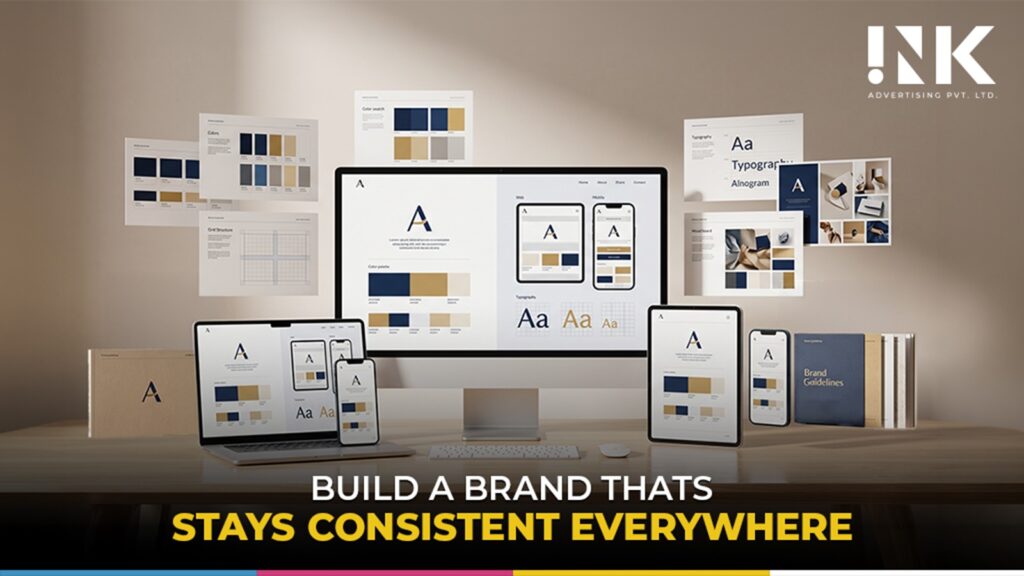
When a business starts scaling, marketing expands faster than structure. Ads go live across platforms, new creatives are pushed every week, vendors handle offline execution, and multiple people start contributing to communication. At first, this feels like growth, but very quickly it turns into inconsistency. One campaign feels premium while another looks discount driven. Social media follows one tone, while brochures reflect something entirely different. Even though budgets increase, brand recall does not improve at the same pace, and this is the exact point where most businesses begin to lose control of their identity. A brand book is what prevents this from happening. It is not just a design document, it acts as a control system that ensures every output aligns with a single brand direction. We at INK Advertising Pvt. Ltd. often see this gap clearly when busine What Most Businesses Get Wrong About Brand Books Many businesses assume a brand book is only about logos and colors, and that misunderstanding is exactly why most brand guidelines fail in execution. A practical brand book defines how your brand behaves, not just how it looks, and that distinction is what separates strong brands from inconsistent ones. It answers critical questions such as whether your brand should sound aspirational or approachable, how messaging should shift between premium communication and offer driven campaigns, and what kind of visuals truly represent your identity. Without this clarity, every campaign becomes a fresh interpretation, and over time this creates brand drift where your identity starts losing its sharpness and recognition becomes inconsistent. Why Growing Businesses Need Brand Guidelines More Urgently Established brands can afford short term inconsistency because recall is already built, but growing businesses do not have that advantage. Every impression contributes to building memory, and every inconsistency slows that process down significantly. Consider a real estate brand operating in Delhi NCR where digital ads follow a clean and modern aesthetic, but site hoardings appear cluttered with aggressive pricing and bright colors, while brochures sit somewhere in between. Individually, each asset may perform, but together they create confusion, and confusion directly impacts trust and conversion. A structured brand book eliminates this gap by acting as a single reference point across digital, print, and on ground marketing, ensuring that every touchpoint reinforces the same brand identity. Where the Absence of a Brand Book Starts Hurting Revenue The impact of inconsistent branding is not limited to visuals, it directly reflects in marketing performance and revenue outcomes. When your audience cannot instantly recognize your brand, every campaign starts behaving like a first interaction, increasing acquisition costs because familiarity is never built over time. Execution also becomes slower because every design requires approvals on basic elements like colors, fonts, and tone, which delays campaigns and reduces agility, especially for businesses operating in competitive or seasonal markets. At the same time, inconsistent messaging weakens brand positioning, making it difficult for customers to clearly understand what your business stands for and reducing your ability to command premium pricing. How a Brand Book Directly Improves Marketing ROI A well structured brand book does more than create consistency, it improves the efficiency and effectiveness of every marketing effort. When visuals and tone remain consistent, users begin to recognize your brand instantly, even before engaging deeply with the content, which reduces friction and improves response rates. It also allows campaigns to scale faster because teams and vendors can execute without repeated approvals on foundational elements. This creates operational efficiency and ensures faster go to market execution. Over time, digital ads, print media, outdoor campaigns, and social media start working together as a unified system instead of disconnected activities. If you are already investing across multiple channels, this is where a strong integrated marketing strategy begins to deliver measurable results. What a Practical Brand Book Should Include A brand book should be designed for execution, not just presentation, and it must provide clarity across all aspects of brand communication. It should define logo usage with clear rules for spacing, placement, and variations to avoid misuse across platforms. The color system must include primary and secondary palettes with exact codes to maintain consistency across digital and print formats, while typography should define a clear hierarchy so that all communication maintains a uniform structure. Tone of voice is equally important as it determines how the brand communicates across different contexts, whether it is a premium campaign, an informative piece, or a sales driven message. Visual direction should guide photography, graphics, and layout styles so that creative output remains aligned. Including real world application examples such as social media creatives, hoardings, brochures, and advertisements ensures that the brand book is practical and easy to implement. For businesses exploring how to create a brand book, focusing on usability and clarity is far more important than visual complexity. Why This Matters More in the Indian Market In markets like Delhi NCR, businesses rarely operate on a single channel, and most brands simultaneously run digital campaigns, invest in outdoor media, distribute print material, and maintain an active social presence. This multi channel exposure increases the risk of inconsistency when there is no structured brand system in place. A typical customer might see your ad online in the morning, pass your hoarding during the day, and visit your website later. If these touchpoints do not feel connected, recall weakens, but when they align seamlessly, recall strengthens significantly and builds trust over time. This is why brand guidelines for businesses in India are no longer optional, they are essential for scaling marketing efforts effectively and creating a lasting brand presence. A Brand Book Is Not Static A brand book should not be treated as a one time exercise. As businesses grow, expand into new markets, introduce new services, and explore new platforms, their communication evolves, and the brand guidelines should evolve alongside it. The objective is not to restrict creativity but to ensure controlled flexibility so that every new initiative still aligns with the core brand identity while adapting to changing

blog

Influencer Marketing That Actually Works: Why the Right Influencer Matters More Than Reach

Influencer marketing in India has evolved from a visibility-driven tactic into a performance-oriented strategy. In its early stages, brands were largely focused on collaborating with creators who had massive follower counts, assuming that higher reach would naturally translate into better results. Over time, this assumption has proven to be flawed. The Indian digital audience has become more aware, more selective, and far less responsive to generic promotional content. At INK Advertising Pvt. Ltd., this shift is visible across campaigns in sectors like real estate, hospitality, and lifestyle. Brands that prioritize relevance over reach are consistently seeing stronger engagement, better lead quality, and more efficient cost per acquisition. Influencer marketing is no longer just about being seen. It is about being trusted and acted upon. Why Choosing the Right Influencer Defines Campaign Success 1. Audience Relevance Is the Core Variable The effectiveness of any influencer marketing strategy depends heavily on how closely the influencer’s audience aligns with the brand’s target market. A mismatch here leads to superficial engagement that rarely converts into meaningful business outcomes. For instance, a real estate campaign targeting working professionals in Delhi NCR requires creators whose audience reflects similar demographics, income groups, and intent patterns. When audience alignment is precise, even moderate reach can deliver strong results. This is because the message is being delivered to people who are already more likely to consider the offering. This principle is central to building high-performing influencer campaigns in India. 2. Authenticity Drives Conversion Behavior Indian audiences have developed a strong filter for promotional content. They tend to engage more with influencers who maintain a consistent and credible voice rather than those who frequently push sponsored messages without context. Authenticity, in this sense, becomes a measurable performance factor. An influencer who integrates a brand naturally into their content narrative often generates deeper engagement and higher trust. This trust directly impacts conversion behavior, making authenticity one of the most critical elements in influencer selection. 3. Engagement Quality Matters More Than Surface Metrics While likes and views remain visible indicators, they do not necessarily reflect the effectiveness of a campaign. The quality of engagement, reflected in meaningful comments, conversations, and direct inquiries, provides a clearer picture of audience intent. Campaigns managed by INK Advertising Pvt. Ltd. often prioritize creators who foster active audience interaction. These interactions indicate a stronger connection between the influencer and their followers, which ultimately translates into better campaign ROI. Understanding Micro, Macro, and Nano Influencers in a Performance Context Micro Influencers and High-Intent Engagement Micro influencers in India have emerged as powerful assets for brands aiming to drive conversions rather than just awareness. Their relatively smaller but highly engaged audiences often trust their recommendations more deeply. This makes them particularly effective for industries where decision-making involves higher consideration, such as real estate and experiential services. Macro Influencers and Scaled Visibility Macro influencers still play a role, especially when the objective is to build large-scale visibility in a short period. However, their engagement rates tend to be lower compared to micro influencers. Without a strong content strategy and clear funnel integration, campaigns relying solely on macro influencers may struggle to deliver measurable ROI. Nano Influencers and Hyperlocal Impact Nano influencers are becoming increasingly relevant for hyperlocal campaigns, especially in urban clusters like Delhi NCR. Their close-knit audience base often leads to highly personalized engagement. For brands targeting specific neighborhoods or communities, nano influencers can create a strong localized impact that larger creators cannot replicate. The Real Challenge: Measuring Influencer Marketing ROI One of the most persistent challenges in influencer marketing is the perception that it lacks measurable outcomes. In reality, the issue lies in how campaigns are structured and tracked. At INK Advertising Pvt. Ltd., influencer marketing is integrated into a broader performance marketing framework. Instead of treating influencer content as standalone activity, it is connected to landing pages, retargeting campaigns, and CRM systems. This allows brands to track user journeys from initial engagement to final conversion. Such integration transforms influencer marketing from a branding exercise into a measurable acquisition channel. It also provides actionable insights that help optimize future campaigns. Common Strategic Gaps That Reduce Campaign Effectiveness A significant number of influencer campaigns fail due to strategic oversights rather than execution issues. Brands often select influencers based purely on follower count without evaluating audience data or engagement patterns. In many cases, there is no clearly defined conversion pathway, leaving potential customers without direction after interacting with the content. Another common gap is the lack of continuity. Influencer marketing is often treated as a one-time activity instead of an ongoing strategy. Without consistency and optimization, even well-executed campaigns struggle to deliver long-term value. A Performance-Driven Approach to Influencer Marketing For influencer marketing to deliver consistent results, it needs to be approached with the same rigor as performance marketing. This begins with defining clear objectives, whether the goal is lead generation, brand awareness, or direct sales. The next step involves identifying audience segments and selecting influencers based on data insights rather than popularity. Messaging must be tailored to align with both the brand’s positioning and the audience’s expectations. Finally, performance needs to be tracked continuously, with insights feeding back into campaign optimization. This structured approach ensures that influencer collaborations contribute directly to business growth rather than just digital noise. Why Relevance Is the New Reach As digital ecosystems become more saturated, relevance has emerged as the defining factor in marketing success. Influencer marketing, when executed with precision, allows brands to connect with audiences in a more personal and credible way than traditional advertising. For growing brands in India, especially in competitive markets like Delhi NCR, this can significantly reduce customer acquisition costs while improving conversion efficiency. The key lies in choosing influencers who align not just with the brand’s image but with its business objectives. Conclusion Influencer marketing has matured into a strategic discipline where data, relevance, and authenticity determine outcomes. Brands that continue to chase vanity metrics will find it increasingly difficult to justify their investments. Those that

blog

Inside a 360° Campaign: How Print, Digital & OOH Work as One

On paper, many brands are already running a 360-degree marketing campaign. They are present in print, visible across outdoor advertising, and active on digital platforms. Yet, despite this presence, the campaign does not always translate into strong recall because the real challenge is not reach, it is alignment. Each channel often evolves on its own. Messaging shifts, visuals adapt, and the core idea gradually dilutes as it moves across platforms. To the audience, this reduces the sense of a unified brand experience and limits the campaign’s overall impact. A true 360-degree marketing campaign is not about being everywhere. It is about being consistent everywhere, and that requires a far more deliberate approach. Building the Core Narrative First Before any execution begins, the campaign needs a central narrative. Not just a headline or a design direction, but a clear positioning that defines how the brand should be perceived. This becomes the foundation across all channels, whether it is print media, outdoor advertising in India, or digital campaigns. Every piece of communication must reflect the same underlying idea. When this narrative is strong, the campaign naturally feels connected, regardless of where the audience encounters it. This is what separates coordinated campaigns from truly integrated ones. Print as the Credibility Anchor Print continues to play a significant role, especially in markets like Delhi NCR, where trust and scale matter. In a 360 marketing execution, print is not just used for visibility; it acts as the credibility layer of the campaign. A well-crafted print ad establishes seriousness and intent, particularly for sectors like real estate, retail, and large-scale consumer offerings. Its real strength lies in alignment. When print messaging flows seamlessly into outdoor and digital, it creates a strong and consistent first impression. Used correctly, print becomes the starting point of a larger integrated experience. OOH as the Reinforcement Layer Outdoor advertising brings continuity into the campaign, but it operates very differently from print. Unlike print, which allows for detailed storytelling, OOH operates within seconds because the audience does not pause to process. The message has to register instantly, making clarity non-negotiable. In an integrated advertising campaign, outdoor reinforces what the audience has already seen. It simplifies and repeats the core message while maintaining high-frequency visibility across key locations. This keeps the campaign present in the consumer’s daily routine and steadily builds familiarity.  Digital as the Conversion Engine Digital is where the campaign transitions from visibility to response, and its effectiveness depends on consistency. When the digital experience aligns with print and OOH, users experience continuity instead of disruption. At INK Advertising Pvt. Ltd., digital campaigns are built as a direct extension of the same narrative. From ad creatives to landing pages, everything reflects what the audience has already seen offline. This familiarity reduces friction, increases engagement, and improves conversion because people respond more confidently to what they recognise. The Importance of Synchronisation Running multiple channels is operational. Synchronising them is strategic. Timing plays a critical role in a 360-degree marketing campaign, as print releases, outdoor visibility, and digital campaigns must align closely to maximise impact. Consistency extends beyond visuals. Messaging, tone, and offers must remain uniform across platforms to maintain clarity and trust. When all elements move together, the campaign feels cohesive and strengthens recall across every touchpoint. Measuring What Drives Real Impact A common limitation in evaluating integrated campaigns is relying only on digital metrics. While clicks and conversions provide immediate insights, they do not capture the full impact of print and outdoor advertising. A strong 360 marketing execution also reflects in broader indicators such as increased brand searches, higher direct traffic, and stronger on-ground response. These signals show that the campaign is working as a connected system, not just as isolated channels. Measurement, therefore, needs to reflect the full scope of the campaign. Where Alignment Becomes Critical The biggest challenge in multi-channel campaigns is maintaining consistency during execution. When different teams or vendors handle separate channels, alignment becomes harder to sustain, and communication begins to diverge. Over time, this affects efficiency and reduces overall impact. A unified approach ensures that every channel contributes to the same objective, strengthening both performance and brand recall. The INK Approach to 360° Campaigns At INK Advertising Pvt. Ltd., campaigns are designed and executed as a single, unified system. Print media, outdoor advertising, and digital are not treated as separate services but developed together under one strategic direction. This ensures every touchpoint reflects the same idea, maintains consistency, and builds stronger recall. The result is not just visibility across platforms, but a campaign that performs as one cohesive system. Because in 360° campaigns, execution is not about managing channels. It is about controlling the experience across them. Recent Post

blog

Google Ads vs Meta Ads: Where to Invest for Better ROI | INK Advertising

Every brand in Delhi NCR eventually faces the same budget question: Google Ads or Meta Ads? It sounds like a clean either/or, but the wrong call does not just waste money – it hands your market over to a competitor who got the answer right. At INK Advertising, we have run paid campaigns for brands across Delhi NCR and pan-India for over four decades. This blog is our honest, data-backed take – drawing only from authoritative published sources. INR 700 billion India digital ad revenues in 2024 Source: FICCI-EY M&E Report 2025 (EY India) 55% Share of total ad spends now digital Source: FICCI-EY M&E Report 2025 (EY India) 17% Year-on-year growth in digital advertising Source: FICCI-EY M&E Report 2025 (EY India) The Market Reality in India India’s digital advertising market crossed INR 700 billion in 2024, growing 17% year-on-year, and digital now accounts for 55% of all advertising spend in the country – surpassing television for the first time in history. Growth was led by search and social media (11%) and e-commerce advertising (50%). Source: FICCI-EY Media & Entertainment Report 2025, as published by EY India (ey.com/en_in/insights/media-entertainment)  The Dentsu-E4M Digital Advertising Report 2024 projected India’s digital ad market to reach INR 62,045 crore by 2025, expanding at a CAGR of 23.49%. The same report noted that social media is the primary driver of digital spend at 30%, followed by online video at 29% and paid search at 23%. Source: Dentsu-E4M Digital Advertising Report 2024, as reported by Exchange4media (exchange4media.com)  For brands in Delhi NCR, this structural shift has one clear implication: the budget conversation is no longer about whether to advertise digitally, but about where within the digital ecosystem your money works hardest. The Core Difference: Intent vs. Discovery Both platforms reach hundreds of millions of people. Both serve ads. But they do fundamentally different jobs in a buyer’s journey, and confusing those jobs is the single most expensive mistake a marketer can make. Google Ads: Demand Capture When someone in Gurugram types “real estate agency Sohna Road” or “advertising agency Delhi NCR” into Google, they are not browsing. They have decided they need something and are now looking for who provides it. Your ad meets an intent that already exists. This is Google’s core commercial power – and it is the reason Google Search commands a premium CPC in every category. Meta Ads: Demand Creation A consumer scrolling through Instagram in Hauz Khas has not decided to switch their skincare brand tonight. A well-crafted Reel can put that thought in their head. Meta does not capture intent – it builds it. That is a completely different kind of value, and it requires a completely different approach to creative, targeting, and measurement. Understanding this distinction – capture vs. creation – is the most important step before a single rupee is allocated. Every other decision, including format, targeting, bidding strategy, and measurement framework, flows from this one. What the Authoritative Data Shows Google Ads Benchmarks According to WordStream’s 2024 Google Ads Benchmark Report – based on over 17,000 search advertising campaigns – the average CTR for Google Search Ads is 6.42% across all industries. High-intent verticals performed even better: Arts & Entertainment reached 13.04%, Sports & Recreation 9.66%, and Real Estate 9.20%. Source: WordStream: Google Ads Benchmarks 2024, wordstream.com/blog/2024-google-ads-benchmarks The average conversion rate across Google Search Ads in 2024 was 6.96%, rising to 7.52% in 2025 data. Conversion rate increased for 65% of industries year-on-year in 2025, with some sectors – Sports & Recreation and Education & Instruction – seeing increases above 40%. Source: WordStream: Google Ads Benchmarks 2025, wordstream.com/blog/2025-google-ads-benchmarks | WordStream: Conversion Rate Benchmarks, wordstream.com/blog/conversion-rate-benchmarks  CPC increased for 86% of industries in 2024, with an average overall increase of 10% year-on-year. Cost per lead rose from an average of $66.69 in 2024 to $70.11 in 2025 – a 5.13% increase. This reflects ongoing auction pressure as more advertisers compete for the same high-intent queries. Source: WordStream: Google Ads Benchmarks 2024 & 2025, wordstream.com  Meta Ads Benchmarks India has the largest Facebook audience in the world. As of early 2024, India had 329 million Facebook users, ahead of the United States at 179 million. Meta’s investor reports confirm Facebook globally has over 3.07 billion monthly active users, with the Asia-Pacific region and Rest of the World representing the fastest-growing segments. Source: Meta Investor Relations, Q4 2024 Earnings Report | Statista: Facebook users in India 2024  Reels are now a central part of the platform’s usage. Meta has reported that users share 3.5 billion Reels daily across Facebook and Instagram, with Reels accounting for 50% of all time spent on Instagram. This has direct implications for advertisers: Reels placements have become a primary reach driver for brands targeting younger urban audiences in Delhi, Gurugram, and Hyderabad. Source: Meta (@Creators on Threads), as cited by inBeat Agency citing Meta data | Instagram @Creators account On conversion performance, WordStream’s benchmark data shows the average Meta Ads (Facebook Lead Ads) conversion rate is 7.72% across all industries – comparable to Google on a like-for-like basis when the right format is used. Industries like Restaurants & Food (18%+), Attorneys & Legal Services (10.53%), and Education (10.05%) perform particularly well. Source: WordStream: Conversion Rate Benchmarks, wordstream.com/blog/conversion-rate-benchmarks  Platform Comparison at a Glance Parameter Google Ads Meta Ads Primary function Captures existing search intent Creates and shapes new demand Avg. Search CTR (Global) 6.42% — Avg. Conversion Rate 6.96% (Search) 7.72% (Lead Ads) Audience reach in India Limited by search volume 329M+ on Facebook alone Visual storytelling Limited – text-heavy formats Rich – video, Reels, Stories Speed to conversion Faster – high intent at search Slower – needs nurturing India CPC trend Rising: +10% avg. YoY (2024) Lower entry point vs Google Best fit (India) Real estate, B2B, healthcare, legal D2C, FMCG, lifestyle, apps Retargeting Strong (RLSA, Display Network) Very strong (Custom Audiences) Brand building Moderate Strong – especially via Reels Sources: WordStream Google Ads Benchmarks 2024 & 2025 | Meta Investor Relations Q4 2024 | Dentsu-E4M

blog

How Consumer Behavior is Changing in the Digital Era: What Brands Need to Understand Today

Consumer behavior today is far more dynamic than it has ever been. In a digitally connected ecosystem like Delhi NCR, where consumers are constantly exposed to content, choices, and comparisons, decision-making has evolved significantly. The traditional funnel is no longer linear. Instead, consumers move across platforms, validate information, and make decisions based on a mix of logic, emotion, and experience. For brands, this shift demands more than just visibility. It requires relevance, timing, and a deeper understanding of how people think and act online. From Passive Attention to Active Intent Consumers are no longer passive viewers. They actively search, compare, and validate before making decisions. A typical journey now starts with a query and moves through multiple touchpoints before action. Today’s consumer journey often includes: Searching on Google Comparing multiple options Evaluating reviews and content Whether someone is planning a weekend outing or considering a high-value purchase, intent is what drives action, not just exposure. For brands, this means search visibility becomes critical. Content needs to answer real questions, and campaigns must focus on intent-driven targeting rather than just impressions. Personalization is the New Standard Generic communication is easy to ignore. What works today is messaging that feels relevant and specific. Consumers expect brands to understand their preferences and deliver content that aligns with their interests. In a diverse market like Delhi NCR, localized messaging and cultural context often make the difference between engagement and scroll-past. Effective personalization today means: Audience segmentation based on behavior Region-specific messaging Content aligned with user intent The shift here is simple but important: move from mass communication to precision-driven storytelling. Content Consumption is Faster and More Visual Content is no longer consumed, it is scanned, judged, and either engaged with or skipped within seconds. Short-form video has redefined attention spans. The first few seconds now determine whether your content works or disappears. For brands, this changes the approach entirely. Visual storytelling becomes essential, consistency matters more than volume, and the focus shifts to creating content that is immediate, engaging, and easy to consume. Trust is Built Through Proof, Not Promotion Consumers today rely far more on validation than on brand claims. Reviews, real experiences, and influencer content shape perception. But the dynamic has evolved. It is no longer about working with as many influencers as possible, it is about choosing those who are credible and relevant to the audience. What works today: Authentic collaborations Experience-driven content Credibility over reach Authenticity now outperforms scale. Content that feels real builds trust, while overly polished messaging often gets ignored. Experience is the Real Differentiator The focus has shifted from what a brand offers to how it makes people feel. Consumers are drawn to experiences that are memorable, shareable, and emotionally engaging. This is especially visible in lifestyle-driven categories, where the overall experience often outweighs individual features. For brands, this means moving beyond functional messaging and investing in storytelling that captures the experience. The Multi-Platform Decision Journey Consumers no longer rely on a single touchpoint. Their journey is spread across platforms, often moving from discovery on social media to research on search engines, followed by validation through reviews and a final interaction on the website. This makes consistency critical. A typical journey today looks like: Discovery through social media Research via search engines Validation through reviews Final action on the website or direct inquiry Messaging, design, and communication across platforms need to align seamlessly to build confidence and reduce friction. Speed and Convenience Define Conversions Expectations around speed and ease have significantly increased. Consumers want quick-loading websites, fast responses, and seamless experiences. Even small delays or friction points can lead to drop-offs. In a competitive environment like Delhi NCR, convenience is not an advantage, it is a baseline expectation. Conclusion: Marketing for the New Consumer The digital era has reshaped not just platforms, but people. Consumers today are more informed, more selective, less patient, and far more experience-driven. For brands, this means adapting strategies to match evolving behavior, not relying on what worked earlier. At INK Advertising Pvt. Ltd., the focus is on aligning brand communication with how consumers actually think and act today, combining strategy, creativity, and execution to deliver meaningful results. Because in today’s landscape, success is not about being everywhere, it’s about being relevant where it matters. Recent Post

Scroll to Top