


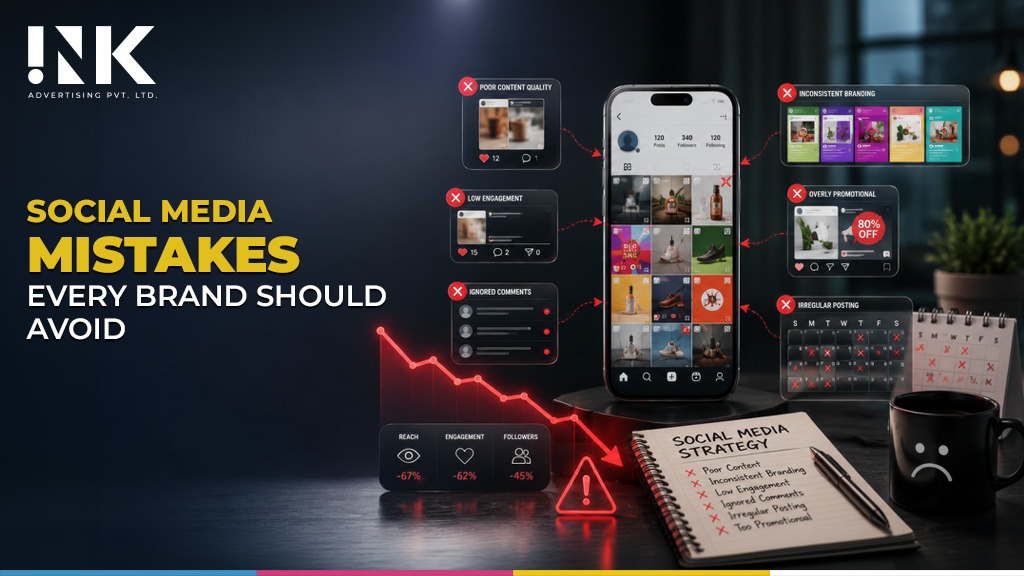
Social Media Mistakes Every Brand Should Avoid Before They Cost You Customers
Introduction Social media has become one of the most powerful marketing channels for businesses of every size. Whether you are a local business, an established enterprise, or a growing startup, your audience is spending hours every day on platforms like Instagram, Facebook, LinkedIn, and YouTube. While this creates endless opportunities to connect with potential customers, it also means competition has never been higher. Many brands invest in creating attractive graphics and posting regularly but still struggle to generate engagement, enquiries, or sales. In most cases, the problem is not the platform. It is the strategy behind the content. Understanding the social media mistakes every brand should avoid can help businesses create stronger relationships with their audience, improve brand visibility, and achieve measurable marketing results. Rather than chasing trends or focusing only on follower counts, successful brands build consistent strategies that support long term business growth. Why These Social Media Mistakes Matter Every post your business publishes contributes to how customers perceive your brand. An inconsistent posting schedule, poor quality content, or slow responses to customer queries can gradually reduce trust and limit your reach. Social media platforms also reward accounts that consistently provide value and encourage meaningful interactions. Brands that ignore strategy often find themselves spending more on advertising simply to achieve results that could have been earned organically through better planning. Avoiding common mistakes saves time, improves marketing efficiency, and helps businesses maximise the return on every piece of content they publish. Mistake 1: Posting Without a Clear Strategy One of the most common social media marketing mistakes is creating content without defining its purpose. Posting simply to remain active rarely delivers meaningful business results. Every piece of content should answer three important questions: Who is the audience? What business objective does this post support? What action should viewers take after seeing it? A successful content strategy balances educational, promotional, entertaining, and community driven content. Instead of treating every post as a standalone update, brands should ensure every piece contributes to a larger marketing objective. How to Fix It Build a monthly content calendar aligned with your business goals, seasonal campaigns, customer interests, and product launches. Planning ahead creates consistency while allowing room for trending topics when they genuinely fit your brand. Mistake 2: Treating Every Post Like an Advertisement Customers rarely follow brands because they want to see continuous sales messages. They follow businesses that educate them, inspire them, solve problems, or provide useful insights. When promotional content dominates your feed, engagement naturally begins to decline. Audiences quickly lose interest if every interaction feels like a sales pitch. Instead, share customer success stories, educational tips, behind the scenes content, industry updates, employee highlights, and frequently asked questions. Promotional posts become far more effective when they are supported by valuable everyday content. How to Fix It Aim for a healthy content mix where promotional posts are balanced with educational and relationship building content that encourages conversations rather than simply asking customers to buy. Mistake 3: Ignoring Audience Engagement Social media is designed for conversations, not one way communication. Brands that ignore comments, direct messages, reviews, or customer mentions often miss opportunities to build loyalty. Even worse, delayed responses can create the impression that customer experience is not a priority. Businesses that actively engage with their audience often develop stronger communities and higher customer trust. A thoughtful response to a question or complaint can leave a stronger impression than the original post itself. How to Fix It Allocate dedicated time each day to respond to comments, messages, and reviews. Consistent engagement demonstrates professionalism while helping improve platform visibility. Mistake 4: Chasing Every Trend Trending audio, viral memes, and popular challenges can increase visibility, but only when they align with your brand identity. Many businesses join trends simply because everyone else is doing so. While this may generate temporary attention, it often weakens brand consistency and confuses audiences about what the business actually represents. Every trend should support your messaging rather than distract from it. How to Fix It Before participating in a trend, ask whether it reflects your brand personality, provides value to your audience, and supports your marketing objectives. Mistake 5: Inconsistent Brand Identity Imagine visiting a company’s Instagram page, LinkedIn profile, and Facebook account only to find completely different messaging, colours, and tone of voice. Instead of building trust, this creates confusion. Consistency helps customers recognise and remember your business. From visual identity and captions to typography and messaging, every platform should reinforce the same brand personality while adapting content to suit each audience. How to Fix It Create clear brand guidelines for social media that define colours, fonts, tone of voice, logo usage, and messaging principles. Consistency strengthens brand recall and creates a more professional online presence. Mistake 6: Ignoring Analytics One of the biggest social media mistakes every brand should avoid is relying only on likes and follower counts to measure success. High reach means very little if it does not generate website visits, enquiries, or conversions. Businesses that never review performance data often continue investing in content that fails to deliver meaningful results. Important metrics include engagement rate, click through rate, website traffic, lead generation, audience retention, and conversions. How to Fix It Review performance every month and identify which content formats, posting times, and topics consistently perform best. Let data guide future content decisions instead of assumptions. Mistake 7: Posting Without a Content Calendar Last minute posting often leads to repetitive ideas, inconsistent quality, and missed opportunities around important campaigns or seasonal events. A structured content calendar helps marketing teams maintain consistency while ensuring every campaign supports broader business goals. Planning ahead also provides enough time to create better visuals, stronger copy, and more thoughtful campaigns. How to Fix It Develop monthly content calendars that include awareness content, educational posts, promotional campaigns, customer stories, and interactive content. This creates a balanced and sustainable publishing schedule. Mistake 8: Using the Same Content Across Every Platform Every social media platform serves a different purpose. LinkedIn
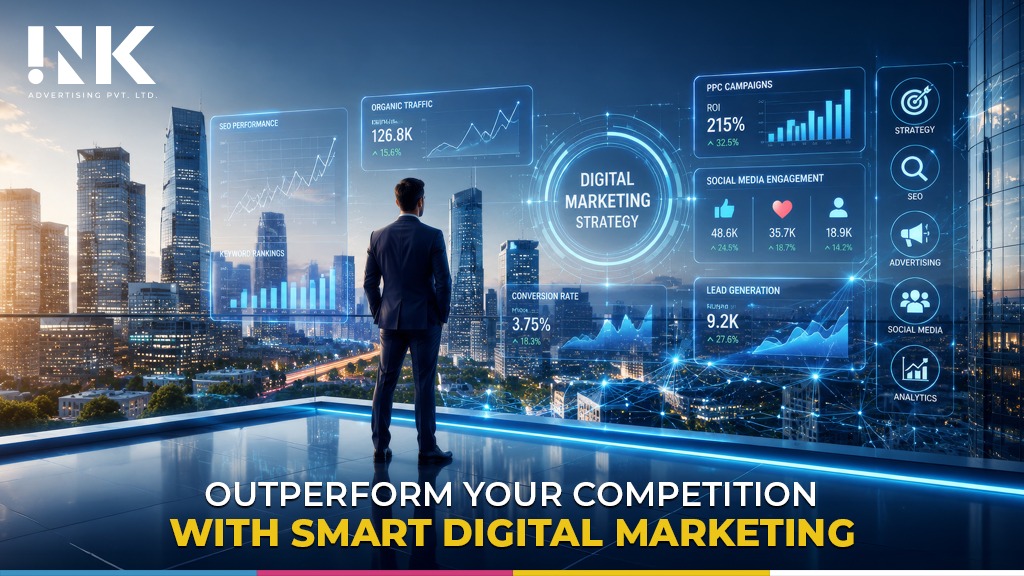
How Smart Digital Marketing Helps You Outperform Competitors
Introduction Every business wants to stay ahead of the competition, but in today’s digital landscape, simply having a website or posting regularly on social media is no longer enough. Customers compare brands within minutes, read reviews, search on Google, browse social platforms, and often make buying decisions before ever speaking to a business. The brands that consistently outperform competitors are not always the biggest. They are the ones making smarter marketing decisions. They understand their customers, use data to improve campaigns, and create meaningful experiences across every digital touchpoint. Smart digital marketing is about combining strategy, creativity, and technology to attract the right audience, build trust, and convert interest into measurable business growth. At INK Advertising, we help businesses develop digital marketing strategies that go beyond visibility. Every campaign is designed to strengthen brand positioning, generate quality leads, and create long term business value. Understanding Your Competitors Before You Compete Many businesses focus entirely on promoting themselves while overlooking what their competitors are doing. This often leads to missed opportunities. Smart digital marketing begins with competitor research. Understanding how competitors rank on search engines, what content they publish, where they advertise, and how customers engage with them provides valuable insights that shape a stronger marketing strategy. Rather than copying competitors, successful brands identify the gaps they have left behind. Identify Opportunities Others Miss For example, if competitors focus heavily on paid advertising but publish very little educational content, your business can build authority through informative blogs, guides, and case studies. Similarly, if competitors dominate one social platform but neglect another where your audience is active, there is an opportunity to capture attention with less competition and lower advertising costs. This strategic approach allows businesses to compete intelligently instead of simply spending more. SEO Helps You Win Customers Before Your Competitors Do Search engines are often the first place customers begin their buying journey. Appearing prominently in search results increases visibility, credibility, and website traffic. However, modern SEO goes far beyond inserting keywords into webpages. Optimise for Customer Intent, Not Just Keywords Successful SEO focuses on understanding why customers are searching. Someone searching “best digital marketing agency for manufacturing companies” has a very different intent than someone searching “what is digital marketing.” Creating content that answers specific customer questions helps businesses attract visitors who are much closer to making a purchasing decision. Technical optimisation, page speed, mobile responsiveness, structured content, and valuable information all contribute to stronger search performance. At INK Advertising, SEO strategies are built around customer intent, ensuring businesses reach audiences actively looking for their products or services. Content Marketing Builds Authority That Competitors Cannot Copy Advertising may attract attention, but valuable content builds trust. Customers prefer businesses that educate rather than constantly sell. Informative blogs, industry insights, videos, whitepapers, and success stories demonstrate expertise while helping customers solve real problems. Unlike paid advertisements that stop delivering results when the budget ends, quality content continues attracting visitors through search engines for months or even years. Create Content That Answers Real Questions Imagine two companies offering identical services. One publishes occasional promotional posts. The other regularly shares buying guides, industry trends, customer success stories, and practical advice that helps prospects make informed decisions. Over time, customers naturally begin trusting the second company because it consistently provides value before asking for a sale. That trust becomes a competitive advantage which is difficult for competitors to replicate quickly. Performance Marketing Makes Every Marketing Pound Work Harder Marketing budgets should never rely on guesswork. Smart digital marketing uses data to improve campaign performance continuously. Every advertisement, landing page, email campaign, and website interaction generates valuable insights that help marketers understand customer behaviour. Turn Campaign Insights into Better ROI Instead of simply measuring clicks, businesses should evaluate lead quality, conversion rates, customer acquisition costs, and lifetime customer value. For example, two campaigns may generate the same number of website visitors, but one may produce significantly more qualified enquiries because it targets the right audience with more relevant messaging. This level of optimisation allows businesses to improve performance while making better use of their marketing investment. Social Media Strengthens Customer Relationships Successful businesses use social media to build communities rather than simply promote products. Customers expect authentic communication, helpful information, timely responses, and consistent engagement. Brands that actively participate in conversations often create stronger customer loyalty than businesses focused solely on promotional content. Sharing behind the scenes updates, educational content, customer testimonials, and industry expertise helps businesses become more relatable while reinforcing brand credibility. Consistent engagement also provides valuable customer feedback that can improve products, services, and future marketing campaigns. Personalisation Creates Better Customer Experiences Customers increasingly expect brands to understand their preferences. Smart digital marketing uses customer insights to deliver more relevant experiences across multiple channels. Deliver Relevant Messages Across Every Customer Touchpoint Email campaigns can recommend products based on previous purchases. Paid advertisements can reconnect with visitors who left without completing an enquiry. Website content can be tailored to different customer segments. These personalised experiences make marketing feel helpful rather than intrusive, increasing engagement while strengthening customer relationships. Businesses that personalise customer interactions often achieve higher conversion rates than competitors using generic messaging. Continuous Optimisation Keeps Businesses Ahead Digital marketing is constantly evolving. Search engine algorithms change, advertising platforms introduce new features, customer behaviour shifts, and competitors regularly adjust their strategies. Businesses that review campaign performance consistently remain better positioned to respond to these changes. Regular performance analysis should include website traffic, keyword rankings, conversion rates, advertising efficiency, customer engagement, and lead quality. Small improvements made consistently often produce far greater long term results than occasional large marketing campaigns. This commitment to continuous improvement helps businesses maintain a competitive advantage even in rapidly changing markets. Why Businesses Partner with INK Advertising Outperforming competitors requires more than managing individual marketing channels. It requires a connected strategy where SEO, content marketing, paid advertising, social media, website optimisation, and analytics all work together towards common business objectives. At INK Advertising, we develop customised digital marketing
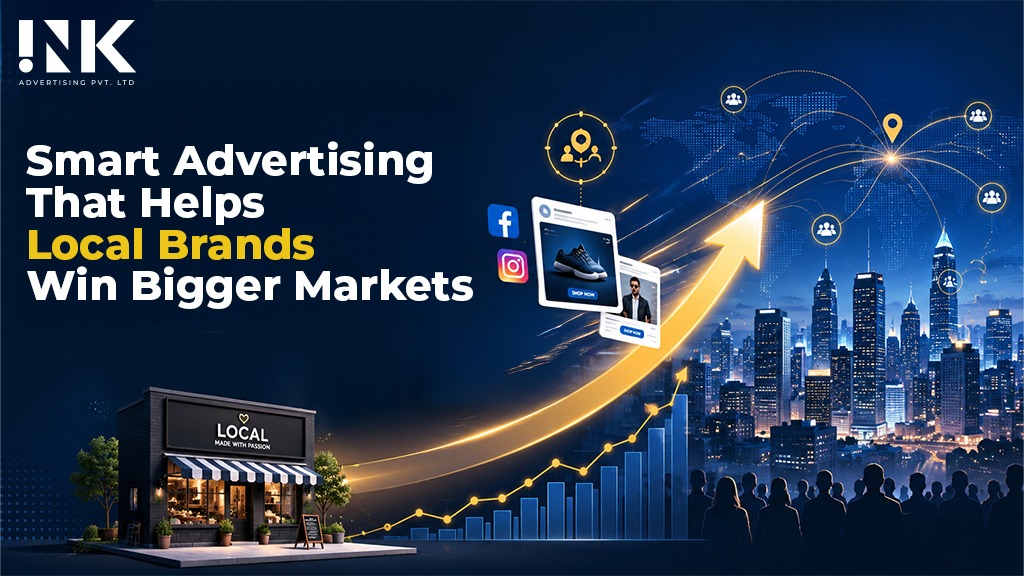
How Local Brands Can Compete With National Players Through Smart Advertising
When a national brand launches a large scale campaign, it often feels impossible for local businesses to compete. Bigger budgets, wider reach, and years of brand recognition can make national players appear untouchable. However, the marketing landscape has evolved significantly over the past decade. Today, success is driven less by the size of a budget and more by the ability to connect with the right audience in meaningful ways. Consumers no longer choose brands simply because they are familiar. They are looking for businesses that understand their needs, communicate authentically, and deliver consistent value. This shift has created opportunities for local businesses to build stronger customer relationships and compete effectively through smart advertising rather than expensive advertising. For local brands, growth is not about matching the spending power of national companies. It is about making every campaign, every message, and every customer interaction count. With a clear brand strategy and well planned marketing efforts, regional businesses can strengthen their presence, generate qualified leads, and build lasting customer loyalty. Local Brands Have an Advantage That Money Cannot Buy One of the greatest strengths of a local business is its understanding of the community it serves. Unlike national brands that create campaigns for broad audiences, local businesses can communicate with people whose preferences, challenges, and buying behaviour they already understand. Whether it is a neighbourhood restaurant promoting seasonal specials, a real estate developer addressing location specific buyer concerns, or a retail business planning campaigns around regional festivals, local brands naturally create communication that feels more relevant. This familiarity allows businesses to respond quickly to changing market needs while building genuine relationships within the community. Relevance remains one of the strongest drivers of successful marketing, and this is where local businesses often outperform much larger competitors. Build a Strong Brand Before Investing in Advertising Advertising can increase visibility, but it cannot compensate for a weak brand identity. Before launching campaigns, businesses should clearly define what makes them different from competitors. Customers are more likely to remember a business that communicates a consistent personality, clear values, and a meaningful promise than one that simply promotes discounts or limited time offers. Define What Makes Your Business Different Every business should be able to answer a few important questions with confidence. Why should customers choose your business? What experience do you promise? What values shape every interaction? These answers should influence every customer touchpoint, including your website, social media platforms, advertising creatives, and offline communication. When every interaction reinforces the same message, the brand becomes more memorable and trustworthy over time. A strong identity also ensures that every marketing campaign contributes to long term brand building instead of delivering only short term visibility. Focus on the Right Audience Instead of the Largest Audience One of the most common mistakes businesses make is trying to reach everyone. National brands require large scale visibility because they operate across multiple regions. Local businesses, however, achieve better results by focusing on audiences that are genuinely likely to become customers. Hyperlocal marketing makes this possible by targeting specific cities, neighbourhoods, residential communities, commercial districts, and nearby locations where demand already exists. Instead of spending marketing budgets on broad audiences with little buying intent, businesses can concentrate their efforts on people who are more likely to enquire, visit, or make a purchase. This targeted approach not only improves campaign performance but also increases the overall return on advertising investment. Build Trust Through Real Customer Experiences Visibility may attract attention, but trust influences buying decisions. One of the biggest advantages local businesses enjoy is the ability to build meaningful relationships with customers through personal interactions. Smart advertising should strengthen that advantage by highlighting authentic experiences rather than relying only on promotional messaging. Sharing customer testimonials, project success stories, case studies, or genuine client feedback helps prospective customers feel more confident about choosing your business. These experiences create credibility because they demonstrate real outcomes instead of making broad marketing claims. People are naturally more likely to trust businesses that showcase authentic experiences, making customer stories one of the most valuable marketing assets any local brand can have. Create Content That Solves Problems Effective marketing goes beyond promoting products and services. It helps people make informed decisions. Modern consumers spend time researching before making a purchase, especially when the decision involves significant financial investment. Businesses that consistently answer customer questions position themselves as reliable industry experts while building long term trust. For instance, a real estate company can publish guides explaining the property buying process, while a healthcare provider can simplify common medical concerns through educational articles. Financial consultants, educational institutions, retailers, and hospitality brands can all benefit from creating useful content that addresses customer needs before attempting to make a sale. This approach improves search engine visibility, strengthens brand authority, and gives advertising campaigns greater long term value. When customers are ready to make a purchase, they are more likely to remember the business that first helped them understand the subject rather than the one that focused only on promotion. Let Data Guide Every Marketing Decision One of the greatest advantages of digital marketing is that every campaign can be measured, analysed, and improved. Unlike traditional advertising, where results were often difficult to track, modern platforms provide valuable insights that help businesses make informed decisions. The strongest campaigns are built on measurable insights rather than assumptions. Analysing audience behaviour, conversion rates, engagement levels, lead quality, and return on investment allows businesses to understand what is working and where improvements are needed. This data driven approach also makes it easier to test different creatives, messaging, and audience segments before increasing advertising budgets. Even small improvements made consistently can have a significant impact on campaign performance over time. Smart advertising is not about getting everything right on the first attempt. It is about learning from every campaign and using those insights to create stronger, more effective marketing initiatives in the future. Make Your Brand Feel Local in Every Campaign One of the biggest strengths of


