

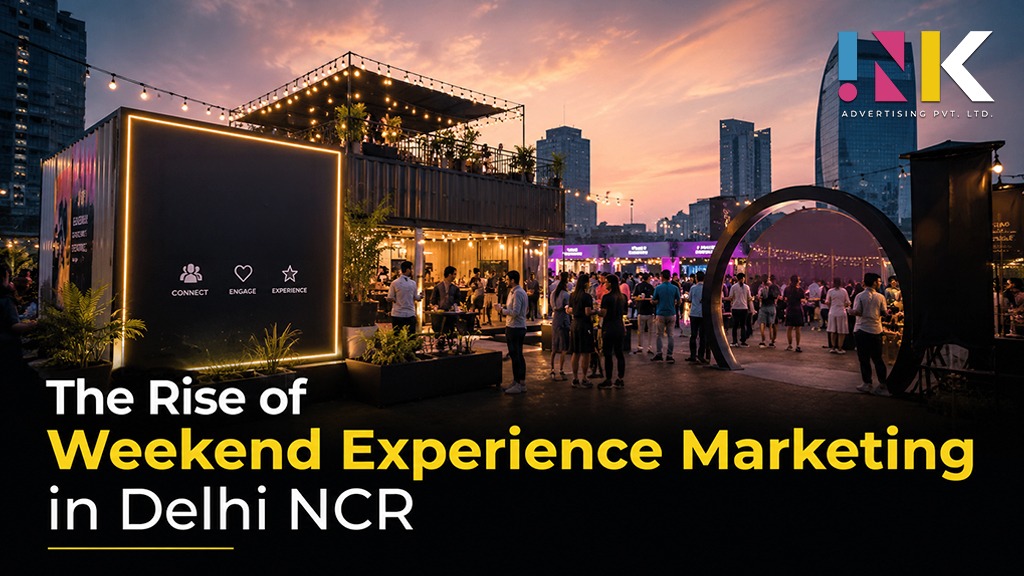
The Rise of Weekend Experience Marketing in Delhi NCR
Weekends have always attracted larger crowds, but today they represent something far more valuable than increased footfall. They have become an opportunity for brands to engage with consumers when they are relaxed, socially active, and more willing to participate in meaningful experiences. Across Delhi NCR, Saturdays and Sundays are no longer reserved only for shopping or leisure. They have become the preferred time for product launches, interactive brand activations, lifestyle events, pop up experiences, and community driven campaigns.
This shift has led to the rapid rise of weekend experience marketing, a strategy that focuses on creating memorable interactions rather than relying solely on traditional advertising. Instead of simply reaching audiences through billboards or digital ads, brands are creating environments where consumers can experience, interact with, and remember them.
For businesses competing in an increasingly crowded marketplace, this approach is helping bridge the gap between awareness and genuine customer engagement.
What is Weekend Experience Marketing?
Weekend experience marketing is an extension of experiential marketing that specifically leverages high consumer activity during weekends to create stronger brand engagement. Rather than communicating through one way advertising, brands invite consumers to participate. This may include product demonstrations, immersive installations, interactive games, live entertainment, workshops, sampling campaigns, or community events designed around the audience’s interests.
The objective is not simply to generate visibility but to create experiences that people associate with the brand long after the event has ended. Unlike traditional campaigns where impressions are often measured through reach alone, experiential campaigns focus on interaction, participation, conversations, and emotional connection, making them particularly effective in today’s consumer landscape.
Why Weekends Have Become Prime Marketing Real Estate
Consumer behaviour changes significantly over the weekend. People have more discretionary time, are generally accompanied by family or friends, and are more open to exploring new places, products, and activities. Shopping malls witness higher footfall, entertainment venues become busier, public events attract larger audiences, and community spaces come alive with cultural and recreational activities.
For marketers, this creates a rare opportunity to engage consumers in an environment where attention is naturally higher and interactions are less transactional.
Instead of interrupting someone’s day with an advertisement, brands become part of their outing. This subtle shift often results in stronger recall and more meaningful engagement.
The Changing Consumer Mindset
Today’s consumers expect more from brands than promotional messages. They want authenticity, participation, and experiences that feel relevant to their lifestyle. Whether it is trying a new product through a live demonstration, participating in an interactive challenge, or engaging with an installation designed for social sharing, people are more likely to remember brands that make them feel involved.
This is particularly evident among Millennials and Gen Z audiences, who actively seek experiences they can share with their social circles both offline and online. However, the appeal extends beyond younger demographics. Families, professionals, and senior citizens also appreciate well planned events that provide entertainment, convenience, or useful information. As expectations evolve, successful campaigns are shifting from broadcasting messages to creating moments that encourage participation.
Where Weekend Experience Marketing Comes to Life
One of the biggest strengths of weekend experience marketing is its versatility. Almost every industry can benefit from engaging consumers in environments where they are already spending their free time.
Shopping Malls and Retail Centres
Malls remain one of the most popular destinations for weekend footfall. Interactive kiosks, product launches, fashion showcases, seasonal displays, and sampling activities help brands connect with consumers who are already in a discovery mindset.
Lifestyle and Entertainment Destinations
Water parks, amusement parks, gaming arenas, cinemas, and entertainment hubs offer brands opportunities to integrate naturally into enjoyable experiences. Campaigns in these environments often generate high engagement because visitors are already emotionally invested in the outing.
Festivals and Community Events
Food festivals, music concerts, cultural celebrations, flea markets, marathons, and neighbourhood events allow brands to interact with audiences in a relaxed and vibrant atmosphere. These events often attract diverse demographics, making them suitable for both mass market and niche campaigns.
Educational Institutions and Corporate Campuses
College festivals, university events, corporate parks, and business campuses provide targeted environments for industries such as technology, education, finance, recruitment, healthcare, and consumer products. Weekend activations in these spaces help brands connect with clearly defined audiences while encouraging meaningful interactions.
Experience Marketing Works Best When Digital Supports It
An on ground activation should never exist in isolation. The most successful campaigns combine physical experiences with digital amplification before, during, and after the event.
Before the activation, brands create anticipation through teaser campaigns, influencer collaborations, paid advertising, and event registrations. During the event, live content, branded hashtags, contests, and real time updates extend the campaign’s reach beyond those physically present. After the event, photographs, videos, testimonials, and user generated content continue to generate engagement while reinforcing brand recall. This integrated approach allows a single weekend activation to deliver value long after the event concludes.
Measuring Success Beyond Footfall
One of the biggest misconceptions about experiential marketing is that its success is measured only by attendance. While visitor numbers remain important, modern campaigns are evaluated using a much broader set of performance indicators.
These may include audience engagement, dwell time, product interactions, qualified lead generation, QR code scans, social media reach, content shares, brand mentions, customer feedback, and post campaign conversions.
When integrated with digital analytics, weekend experience marketing provides brands with measurable insights that help optimise future campaigns and demonstrate return on investment.
Why Strategic Planning Makes the Difference
A successful activation is rarely the result of a single creative idea. It requires careful planning, audience research, location analysis, permissions, logistics, technology integration, staffing, branding, and performance tracking.
Every touchpoint influences how consumers perceive the brand. From the first interaction to the final follow up, consistency plays a crucial role in shaping the overall experience.
This is where partnering with an experienced marketing agency becomes valuable. An integrated approach ensures that strategy, creativity, execution, media planning, and post campaign analysis work together to achieve defined business objectives rather than simply delivering an event.
How INK Advertising Helps Brands Create Meaningful Experiences
With decades of experience across advertising, media, branding, and integrated marketing solutions, INK Advertising Pvt. Ltd. understands that successful campaigns are built around people, not just platforms. From conceptualising weekend activations and experiential campaigns to managing on ground execution, digital amplification, outdoor advertising, and performance analysis, the agency develops solutions that align creative storytelling with measurable business outcomes.
Whether the objective is increasing brand awareness, launching a new product, driving footfall, generating qualified leads, or strengthening customer relationships, every campaign is designed around the audience it aims to reach. By combining strategic planning with seamless execution, INK Advertising helps brands transform weekend opportunities into meaningful consumer engagement.
Conclusion
Weekend experience marketing is no longer an emerging trend. It has become an essential part of how modern brands connect with consumers in an increasingly competitive marketplace.
As audiences seek meaningful interactions over passive advertising, businesses that invest in experiential campaigns are better positioned to build stronger relationships, improve brand recall, and generate measurable results.
For brands operating in Delhi NCR, weekends offer an unmatched opportunity to engage consumers when they are most receptive. The key lies in creating experiences that are thoughtfully planned, strategically executed, and amplified across the right channels.
At INK Advertising Pvt. Ltd., we believe the most effective campaigns do more than capture attention. They create conversations, build lasting impressions, and deliver measurable impact, helping brands stay relevant long after the weekend is over.


