blog

blog

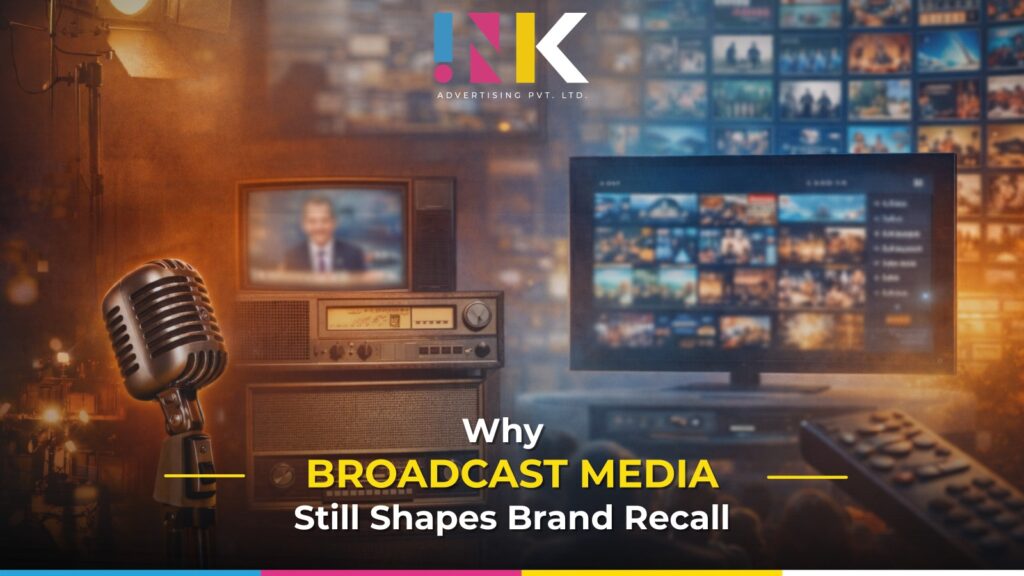
Why Broadcast Media Still Shapes Brand Recall

In an era dominated by digital ads, social media, and performance marketing, many brands question the relevance of broadcast media. Yet, despite the rapid rise of online platforms, broadcast media continues to play a powerful role in shaping brand recall and consumer trust. Television, radio, cinema advertising, and OTT platforms still influence how audiences remember and connect with brands often more deeply than digital-only campaigns. This blog explores why broadcast media remains impactful, how it complements digital marketing, and why brands should still consider it as part of their media strategy. How One Ad Reaches Everyone Broadcast media creates a rare kind of attention, one where brands don’t speak to individuals in isolation but to an entire audience at the same moment. Unlike digital platforms where ads are consumed privately and often skipped, broadcast advertising delivers messages in shared, distraction-limited environments that naturally command focus. This focused viewing becomes even stronger during shared live events. During major cricket tournaments, brands across sectors release their most important campaigns, from banking and telecom to FMCG, ecommerce, and consumer durables, not for targeting precision but for shared visibility. When an advertisement airs between overs, millions watch the same message at the same time. The viewer may not intend to evaluate the brand, but the brand becomes socially visible. The next day, conversations reference the same advertisement because exposure was collective. The impact here is not just reach. It is recognition at a societal level. The brand becomes familiar even to viewers who were not planning a purchase in that category at all. Because everyone watches together, the advertisement becomes socially familiar, not just individually seen. Television and Repetition Memory Television contributes differently from event-based exposure. It works through routine. Shows air daily, audiences return regularly, and the same message appears in a stable environment. Because viewers encounter the advertisement across multiple days rather than a single burst, the brain stores it as familiar information. This is effective for both long decision categories like real estate and education and frequent purchase categories like FMCG, banking services, and telecom plans. The viewer may not remember the exact day they saw the advertisement, but they remember the brand when comparison begins. Television quietly prepares the decision stage before it arrives. Cinema and Impact Recall Cinema advertising operates through intensity rather than frequency. The theatre environment removes distractions. Lights dim, sound surrounds, and the audience faces a single screen. A brand film for a jewellery collection, a retail sale announcement, a university admission campaign, or a new product launch receives full attention for its duration. Even a single exposure can leave strong visual memory because there is no competing input. This makes cinema suitable for launches, positioning campaigns, and premium perception building. The audience does not just see the brand. They experience it. The Role of OTT Platforms OTT platforms combine broadcast impact with digital targeting. During live sports streaming, major series releases, or high viewership content, advertisements reach large audiences while still allowing demographic selection. For example, during cricket tournaments, brands from finance apps to food delivery platforms and consumer electronics use OTT advertising to reach urban young audiences at scale. A single spot can deliver both mass awareness and relevant targeting without fragmenting communication. Instead of replacing television, OTT extends broadcast behaviour into digital viewing habits. Integrating TV, Cinema, and OTT Each broadcast medium contributes differently. Television builds familiarity over time. Cinema creates strong visual memory. OTT bridges reach with audience specificity. When messaging remains consistent across all three, recognition strengthens faster. At INK Advertising, broadcast planning is treated as a coordinated system. The objective is not simply placing ads but deciding what role each platform should play in the communication cycle. A launch may begin with cinema impact, continue with television repetition, and maintain presence through OTT exposure. This continuity prevents campaigns from feeling temporary. Broadcast Media Within the Larger Media Mix Broadcast advertising performs best when supported by other channels. Outdoor reinforces visibility in daily movement. Print adds credibility. Digital maintains accessibility after exposure. When viewers later encounter the same brand message across multiple environments, recognition becomes confirmation rather than introduction. The audience feels they already know the brand because exposure occurred in multiple trusted contexts. In markets like Delhi NCR, this layered communication helps brands move from awareness to familiarity without depending on a single medium. From Reach to Recall Large reach alone does not guarantee memory. Recall forms when exposure is clear, uninterrupted, and repeated within meaningful contexts. Broadcast media provides exactly this environment. A television commercial seen during a widely followed match, a cinema advertisement experienced before a film, and an OTT placement during streaming together create a structured memory path. The audience encounters the brand in different moments but recognises the same message. Over time, this reduces hesitation during purchase decisions because the brand already feels established. Why Broadcast Still Matters Media habits evolve, but human memory formation remains similar. People remember what they watch attentively and what they encounter collectively. Broadcast platforms continue to offer these conditions. At INK Advertising Pvt. Ltd., television, cinema, and OTT advertising are planned as recall building tools within integrated communication strategies. As a best ad agency in Delhi NCR working across sectors, the focus remains on helping brands achieve familiarity at scale rather than visibility in isolation. Because brands that are experienced are remembered, and remembered brands are chosen. Recent Post

blog

How Content Marketing Drives Long-Term Business Growth

Most businesses treat marketing as periodic activity. Campaigns run, offers change, creatives refresh, and then everything resets again. This approach creates visibility but rarely creates memory. What actually sustains business growth over time is not just promotion but communication that continues to build familiarity. Content marketing exists in that space. Instead of asking for attention repeatedly, it builds recognition gradually. When audiences consistently encounter useful, relevant, and clear communication from a brand, trust begins forming before purchase decisions even start. Long-term growth usually comes from accumulated familiarity. People tend to choose what they already understand, not just what they recently saw. The Difference Between Advertising and Content Advertising drives response. Content builds relationships. A performance ad may generate enquiries today, but it does not always answer why the brand should be remembered tomorrow. Content fills that gap by explaining expertise, values, reliability, and intent. It allows a brand to stay present even when the audience is not actively buying. For many businesses, especially in competitive markets, decisions are delayed rather than immediate. During this gap between awareness and decision, consistent content keeps the brand relevant. Without it, every campaign starts from introduction again instead of continuation. What Makes Content Effective Not all content contributes to growth. Frequency alone does not help if communication lacks direction. Effective content marketing is structured around clarity and continuity. A brand needs consistent tone, identifiable voice, and relevance to its category. Educational posts, informational blogs, campaign narratives, social media communication, and website updates must connect to the same positioning. When content pieces operate independently, they create activity but not recall. When they connect, audiences begin linking specific knowledge areas with the brand itself.  This is why content strategy matters more than content volume. Our Approach to Content Marketing At INK Advertising, content marketing begins with brand understanding rather than platform selection. We define what the brand should consistently communicate before deciding how often it should speak. The focus remains on building a recognisable voice across channels. Social media content, website articles, campaign messaging, and brand communication are planned together so that audiences receive one clear narrative instead of fragmented updates. Being recognised as a best ad agency in Delhi NCR has largely come from this discipline of continuity. Instead of treating content as filler between campaigns, it is treated as an ongoing extension of brand identity. Content Across Multiple Platforms Content is not limited to digital posts. It travels across mediums. A brand article strengthens credibility on the website. Social media keeps familiarity alive. Print advertorials reinforce authority. Radio conversations create recall through repetition. Video storytelling on television or cinema builds emotional association. Outdoor communication reinforces presence in daily routines. When messaging remains aligned across these platforms, audiences begin to recognise the brand regardless of where they encounter it. The medium changes but the narrative stays consistent. This integrated communication ensures that marketing efforts do not restart every month but continue building on previous exposure. Local Relevance and Market Behaviour Working across Delhi NCR and Hyderabad has shown how audience behaviour influences content consumption. Urban audiences encounter brands repeatedly but engage selectively. They ignore interruption but respond to familiarity. This makes content continuity important. Instead of appearing only during campaigns, brands remain visible in everyday informational spaces. Educational posts, insight-based communication, and informative storytelling gradually position the brand as dependable rather than promotional. Over time, this reduces evaluation effort because the brand is already understood before comparison begins. From Visibility to Authority The long-term impact of content marketing is authority. When audiences repeatedly learn something from a brand, they begin associating expertise with it. Authority shortens decision cycles because trust already exists before interaction. Businesses that rely only on periodic advertising must repeatedly explain themselves. With structured content, campaigns move directly to value and differentiation because the basics are already clear. This difference directly affects growth stability. Where Businesses See the Change Results of content marketing appear gradually but remain stable. Enquiries become more qualified, conversations become shorter, and brand comparisons reduce. Customers approach with familiarity rather than hesitation. The brand stops competing only on price or offer because perception already exists. Marketing then supports growth instead of repeatedly initiating it. This transition is what defines long-term business growth. Building Growth That Compounds Content marketing works on accumulation. Every article, post, and communication adds to brand memory. Over months and years, this memory becomes recognition, and recognition becomes preference. At INK Advertising Pvt. Ltd., content planning is integrated with branding and media communication so that businesses do not just advertise periodically but communicate continuously. As an advertising agency in Delhi NCR working across sectors, the objective remains consistent: move brands from momentary visibility to lasting familiarity. Campaign performance becomes more stable because communication continues between promotional periods instead of restarting each time. That compounding effect is what makes content marketing a long-term business strategy rather than a short-term promotional activity. Recent Post

blog

INK Advertising Pvt. Ltd. Making Brands Impossible to Ignore

Brands today are everywhere, yet very few are actually noticed. Consumers scroll, skip, and ignore faster than ever. Visibility without clarity does not work anymore. What makes a brand stand out is not how loud it speaks, but how clearly it communicates and how consistently it shows up. Making a brand impossible to ignore is not about chasing trends or forcing creativity. It is about creating communication that feels intentional, relevant, and aligned with what the brand actually stands for. This is where structured advertising and brand thinking matter. What Makes a Brand Impossible to Ignore A strong brand presence is built when messaging, visuals, and media work together. When communication is fragmented, even high budgets fail to create recall. Brands that stand out usually do a few things right. They know their audience, they maintain consistency across platforms, and they choose the right mediums instead of trying to be everywhere. Attention is earned when advertising feels familiar yet fresh. When the same brand voice is carried from a newspaper ad to a hoarding, from social media to on-ground visibility, people start recognising it without effort. How We Approach Brand Communication At INK Advertising, we look at advertising as a system, not isolated creatives. Every campaign starts with understanding what needs to be communicated and why. The focus is always on clarity before creativity. We work on aligning brand messaging, visual language, and media planning so that communication feels cohesive across channels. Whether it is a print campaign, an outdoor rollout, or a digital presence, the intent remains the same: clear brand recall and meaningful visibility. Being recognised as a best ad agency in Delhi NCR has come from this disciplined approach rather than one-off ideas. Using the Right Medium the Right Way Different platforms serve different purposes. Print builds credibility, outdoor builds recall, digital builds engagement, and on-ground activation builds connection. The mistake many brands make is treating every medium the same. Our role is to identify how each medium can strengthen the brand narrative. We plan print advertising with layout discipline and message hierarchy. Outdoor campaigns are designed for quick readability and strong recall. Digital communication is built to stay consistent with offline branding rather than feeling disconnected. This integrated thinking helps brands stay visible without appearing scattered. Building Brands Across Delhi NCR and Hyderabad Markets behave differently, and communication needs to reflect that. Working across Delhi NCR and Hyderabad has allowed us to understand regional nuances, audience behaviour, and media effectiveness in depth. While the brand identity remains consistent, the execution adapts to local context. This balance helps brands expand their presence without losing their core identity. It is especially important for real estate, education, political, and consumer-facing brands where regional trust plays a key role. Where Media Integration Fits In Media today works best when it functions as one system rather than isolated channels. Digital is no longer treated as an add-on, and neither are print, outdoor, television, radio, or cinema. Each medium plays a specific role in how a brand is seen, remembered, and trusted. At INK Advertising, planning begins by looking at how different platforms can work together. Television and cinema help build strong visual recall, radio strengthens frequency and familiarity, outdoor reinforces presence in everyday movement, print adds credibility, and digital supports continuity and engagement. The focus is always on using each medium for what it does best. Communication across all platforms is aligned to the same brand tone, messaging, and visual language. The objective is not just reach, but recognition. When audiences encounter the same brand story across print, outdoor, television, radio, cinema, digital platforms, and on-ground experiences, recall becomes natural rather than forced. This integrated approach ensures that brands remain consistent, visible, and relevant across every touchpoint where audiences interact with them. Turning Visibility Into Recall Attention is temporary. Recall is lasting. The difference comes from consistency and intent. Brands that repeat the right message in the right way become familiar, and familiarity builds trust. This is the space where INK Advertising works best. Helping brands move from being visible to being remembered. From being present to being recognised. Making Brands Impossible to Ignore Making a brand impossible to ignore does not require noise. It requires clarity, structure, and thoughtful execution. That is the approach we follow across every campaign, every medium, and every market. As a best ad agency in Delhi NCR, INK Advertising Pvt. Ltd. continues to work with brands that value long-term brand strength over short-term attention. Because real impact is created when advertising feels intentional, not forced. Recent Post

blog

Measuring Ad Effectiveness: Key Advertising KPIs That Matter

In advertising, visibility alone does not define success. A campaign may generate impressions, clicks, or even conversations, but without clear measurement, it is impossible to determine whether it actually delivers business value. Measuring ad effectiveness is not about tracking every available metric. For brands working with experienced partners like INK, one of the best ad agencies in Delhi NCR, it is about identifying the right KPIs that align with campaign objectives, audience behaviour, and long-term brand goals.  At INK Advertising Pvt Ltd, we believe that strong creativity must always be supported by meaningful measurement. This blog breaks down the most important advertising KPIs, explains why they matter, and helps brands focus on insights that lead to smarter decisions and better returns. What Is Ad Effectiveness? Ad effectiveness refers to how well an advertising campaign achieves its intended outcomes. These outcomes may include brand awareness, engagement, lead generation, sales, or long-term brand recall. Effective measurement answers three critical questions: Did the campaign reach the right audience? Did it influence behaviour or perception? Did it contribute to business growth? The answers lie in choosing the right KPIs rather than relying on surface-level numbers. Why KPIs Matter in Advertising Key Performance Indicators bring clarity and structure to advertising evaluation. Without clearly defined KPIs, campaigns are often judged subjectively or based on vanity metrics that offer little real insight. KPIs allow marketers to align creative direction and media strategy with specific business objectives, ensuring that campaigns are not only visually strong but also strategically effective. They help identify what is performing well, highlight areas that need optimisation, and provide data-backed justification for advertising spends. Over time, consistent KPI tracking also supports better decision-making and improves the planning and execution of future campaigns. This structured approach to measuring ad effectiveness is what allows us at INK Advertising to deliver accountable, result-oriented campaigns for brands across industries. It is important to recognise that not all campaigns are measured in the same way. A brand awareness campaign focuses on visibility, recall, and engagement, while a performance-driven digital campaign is evaluated through conversions, cost efficiency, and return on investment. Selecting KPIs that match the intent of the campaign ensures that results are meaningful, actionable, and aligned with the overall growth goals of the brand. Core KPIs That Measure Ad Effectiveness 1. Reach and Impressions Reach measures how many unique users saw your ad, while impressions indicate how many times the ad was displayed. Why it matters: These metrics are essential for awareness campaigns. They help assess the scale and visibility of a campaign, especially in print, OOH, TV, and digital display advertising. What to watch: High impressions with low engagement may indicate weak creative or poor audience targeting. 2. Click-Through Rate (CTR) CTR measures the percentage of users who clicked on an ad after seeing it. Why it matters: CTR reflects how compelling and relevant your ad is to the audience. It is especially important for digital campaigns, search ads, and social media advertising. What to watch:  A low CTR may signal unclear messaging, weak visuals, or poor targeting. 3. Engagement Rate Engagement includes likes, shares, comments, saves, video views, and time spent on content. Why it matters: Engagement shows how actively audiences interact with your brand. It is a strong indicator of content relevance and creative effectiveness. What to watch: High engagement with no conversion suggests strong awareness but weak call to action. 4. Conversion Rate Conversion rate measures how many users complete a desired action, such as filling a form, making a purchase, or signing up. Why it matters: This KPI directly links advertising efforts to business outcomes. It is critical for performance marketing, lead generation, and ecommerce campaigns. What to watch: Low conversion rates despite high traffic often indicate landing page or user experience issues. 5. Cost Per Acquisition (CPA) CPA measures how much it costs to acquire a customer or lead. Why it matters: It helps brands understand efficiency and return on ad spend. Lower CPA means better campaign optimisation and targeting. What to watch: A low CPA with poor lead quality can still hurt long-term growth. 6. Return on Ad Spend (ROAS) ROAS calculates revenue generated for every rupee spent on advertising. Why it matters: ROAS is one of the most important KPIs for sales-driven campaigns. It provides a clear picture of profitability. What to watch: ROAS should be evaluated alongside brand growth and customer lifetime value to ensure short-term revenue does not come at the cost of long-term brand health. 7. Brand Recall and Brand Lift Brand recall measures whether audiences remember your ad, while brand lift shows changes in awareness, consideration, or preference. Why it matters: These KPIs are crucial for long-term brand building. They are commonly used in TV, digital video, and large-scale campaigns. What to watch: Short-term performance metrics should not replace long-term brand health indicators. 8. Customer Lifetime Value (CLV) CLV estimates the total value a customer brings to a business over time. Why it matters: Advertising should not focus only on immediate conversions. CLV helps brands understand the long-term impact of campaigns and customer relationships. What to watch: Higher acquisition costs can be justified if CLV is strong. Matching KPIs With Campaign Objectives One of the most common mistakes brands make is evaluating campaigns using the wrong KPIs. Every advertising objective requires a different measurement framework, and applying the same metrics across all campaigns often leads to misleading conclusions. Brand awareness campaigns are primarily measured through reach, impressions, recall, and engagement, as the goal is visibility and memory rather than immediate action. Lead generation campaigns, on the other hand, focus on indicators such as click-through rate, conversion rate, cost per acquisition, and lead quality, which reflect intent and response. Sales-driven campaigns are best evaluated through return on ad spend, revenue generated, and customer lifetime value, as these metrics directly connect advertising efforts to business outcomes. Defining clear objectives and success metrics before a campaign goes live is essential, as measurement cannot be retrofitted once execution is

blog

The Role of Media Planning in Successful Multi-Channel Campaign Execution

In today’s highly fragmented media environment, brands need more than visibility- they need strategic alignment, clarity of messaging, and disciplined execution across platforms. This is where media planning becomes the foundation of successful multi-channel campaign execution. At INK Advertising Pvt. Ltd., our media planning approach is driven by a deep understanding of the market, strong operational expertise in the Delhi NCR region, and the ability to scale efficiently across regional and national markets. Why Media Planning Is the Backbone of Campaign Success Media planning defines where, when, and how a brand communicates to achieve its business objectives. With audiences consuming content across digital, print, radio, television, outdoor, and cinema, unstructured planning leads to fragmented messaging and inefficient media spends. A strong media planning framework ensures: Data-led audience targeting across platforms Channel selection aligned with brand and business goals Optimised budget allocation for higher ROI Consistent messaging across every consumer touchpoint Without a structured media plan, even strong creative communication struggles to deliver impact. Media Planning and Multi-Channel Campaign Execution Effective multi-channel campaign execution depends on a clearly defined media roadmap. At INK, we map the customer journey and assign specific roles to each media channel across awareness, consideration, conversion, and recall stages. Our execution model includes: Digital media for precision targeting and performance measurement Print, radio, and outdoor media for scale, credibility, and reach Cinema and transit media for contextual and high-impact engagement Seamless coordination between online and offline platforms This integrated approach ensures message continuity, frequency control, and measurable campaign outcomes. Integrated Media Planning for Scalable Brand Growth As a performance-focused media planning agency in India, we follow an integrated media planning approach that unifies all channels under one central strategy. This allows brands to scale across cities and regions without losing efficiency or consistency. Our integrated media planning framework includes: Market and audience research across regions Strategic channel mix planning based on objectives Budget allocation guided by performance benchmarks Continuous monitoring and optimisation by media specialists This ensures every channel contributes meaningfully to long-term brand growth. 360-Degree Media Planning and Execution at INK Advertising Pvt. Ltd. At INK Advertising Pvt. Ltd., we offer complete 360-degree marketing solutions supported by a dedicated team of media professionals. Our experts plan, buy, execute, and monitor media across all platforms, ensuring full control over quality and performance. What differentiates INK: Dedicated specialists for each media vertical End-to-end ownership of media planning and execution Centralised performance monitoring for consistency Data-driven decision-making across all platforms We do not simply place media. We build accountable, performance-led media systems. Expert-Led STM Strategy Execution Our campaigns follow a structured STM strategy that focuses on Strategic planning, Tactical execution, and Measurable results. Each media vertical is managed by experienced professionals who continuously track performance and optimise outcomes. This expert-led approach helps brands: Reduce media wastage Improve response and conversion rates Achieve predictable and scalable campaign performance Why Brands Choose INK Advertising Pvt. Ltd. Brands partner with INK because we combine disciplined media planning, robust integrated media planning, and reliable multi-channel campaign execution. Our strategies are designed to scale across markets while maintaining clarity, efficiency, and control. Conclusion Successful campaigns are built on intelligent planning, integrated execution, and expert oversight. With the right media planning approach, brands can cut through clutter and achieve measurable growth across markets. At INK Advertising Pvt. Ltd., we plan with intent, execute with precision, and deliver results that scale. Recent Post

blog

Choosing the Right Digital Marketing Agency in Delhi NCR for PPC Services

As competition across Delhi NCR intensifies, businesses relying on performance marketing face a common challenge: how to run Pay Per Click campaigns that drive real business outcomes without unnecessary budget loss. With rising keyword competition across Google Search, Meta platforms, Performance Max, and Display networks, PPC success today depends far more on optimisation depth and audience precision than on spend alone. For brands operating in Delhi, Gurgaon, Noida, Faridabad, and Ghaziabad, PPC has evolved from a tactical advertising channel into a structured growth function that demands strategic oversight, continuous optimisation, and data-backed decision making. The Evolving Role of PPC in Business Growth Modern PPC campaigns are evaluated on far more than impressions or clicks. Businesses today track cost per click, conversion quality, acquisition cost, and return on ad spend. Seasonal demand patterns, audience behaviour, and competitive bidding environments all influence campaign performance. As a result, PPC management has become an analytical discipline that blends keyword intelligence, audience segmentation, landing page alignment, and increasingly, AI-assisted bidding and creative optimisation. Campaign success depends on how efficiently these components are managed together. How INK Advertising Approaches PPC Management At INK Advertising Pvt Ltd, PPC is handled as a performance-led service rather than a media-buying activity. Campaign planning begins with understanding the client’s industry, target audience, seasonality, and commercial objectives. Keyword clusters are structured around intent, not volume alone, ensuring relevance and cost efficiency. Campaigns are continuously refined to improve Quality Scores, reduce wasted spend, and direct budgets toward audiences with higher conversion probability. AI-optimised ads and predictive audience models are integrated into campaign structures so that performance improves over time through platform learning. Reporting focuses on actionable insights rather than surface-level metrics, allowing budgets to be reallocated dynamically based on real performance indicators. Performance Evidence from High-Budget Seasonal Campaigns Seasonal businesses often face the highest pressure on paid advertising performance due to compressed demand windows and intense competition. One such category is leisure and water parks, where visibility, traffic scale, and conversion efficiency must be achieved within limited operational months. INK Advertising has managed multiple seasonal cycles for a large water park brand. During one season, Google Ads generated 4.12 million clicks, representing an increase of more than 3 million clicks compared to the previous year. Alongside traffic growth, cost efficiency improved significantly, with the average CPC reducing to Rs 0.92, which was Rs 1.55 lower than the prior season. These results were driven through a structured funnel approach using Search, Display, Remarketing, and Performance Max campaigns, supported by niche audience research and geographic targeting across Delhi NCR catchment areas. In a subsequent five-month campaign cycle, INK Advertising managed a paid media budget of Rs 4.27 million for the same category. Through tightly optimised keyword strategies, AI-driven testing, and continuous monitoring, the campaigns delivered strong footfall and low acquisition costs. Performance was reviewed daily and adjusted in response to audience behaviour and demand shifts. PPC Precision Across Multiple Verticals Precision-led PPC execution has also delivered results in education-focused campaigns, where targeting accuracy and conversion quality are critical. Meta campaigns structured around admissions cycles achieved a confirmed conversion rate of 11 percent (data received from client after closed admissions) within a single season, supported by segmented audiences and intent-based remarketing funnels. For the water park brand on social platforms, paid campaigns also contributed to brand growth, increasing the social audience to more than five times its original size, while simultaneously improving conversion performance. Why This Approach Delivers Consistent Results INK Advertising focuses on building qualified audiences rather than chasing generic traffic. Continuous optimisation ensures that budgets are protected, CPC is controlled, and conversion probability improves over time. Transparent reporting allows clients to understand exactly how their spend is performing and where optimisation decisions are being made. In a market where PPC agencies are often compared purely on pricing, long-term performance is determined by discipline in targeting, optimisation consistency, and the ability to adapt campaigns in real time. Understanding the Delhi NCR Advantage Audience behaviour varies significantly across Delhi NCR. Search intent, competition intensity, and conversion patterns differ between Gurgaon, Noida, Faridabad, and Ghaziabad. PPC campaigns at INK Advertising are structured to account for these micro-market differences, allowing for more precise regional targeting and better budget utilisation. When PPC Performance Matters For businesses evaluating performance marketing partners in Delhi NCR and looking for controlled acquisition costs, stronger conversion rates, intelligent Google Ads and Meta Ads management, AI-supported optimisation, and transparent reporting, a structured PPC approach becomes essential. INK Advertising works with brands across real estate, hospitality, leisure, education, and retail, supporting both seasonal growth cycles and long-term performance strategies. A Strategic PPC Partner, Not Just a Vendor Effective PPC management today requires collaboration beyond campaign setup. Businesses expect support on landing experience, creative direction, remarketing logic, keyword prioritisation, and Meta funnel structuring. INK Advertising operates as a strategic partner, aligning paid media activity with broader business objectives. Paid advertising at INK is structured with accountability, intelligence, and outcome ownership at its core. To understand how your PPC budgets can deliver stronger results through targeted optimisation, visit https://inkadvertising.in and begin a performance-focused discussion. Recent Post

blog

Why Consistent Branding Is the Backbone of Business Growth

And How INK Advertising Pvt. Ltd. Helps You Build It Strongly and Sustainably In today’s competitive market, brands do not compete only on products. They compete on presence, perception, and personality. Consistent branding becomes the foundation that ties these together and helps a business grow with clarity. Many companies understand this in theory, but very few manage to execute it well across every touchpoint. This is where INK Advertising Pvt. Ltd. becomes a strategic partner, guiding businesses to create and maintain a cohesive identity that supports long-term growth. Consistency Builds Trust and Trust Builds Revenue Every strong brand feels familiar. That sense of familiarity does not happen by accident. It comes from consistent visual language, tone, and messaging. When your audience repeatedly sees the same identity, they feel more confident in choosing you. INK Advertising ensures this trust-building consistency by developing a unified brand framework for your business. The agency aligns your design language, communication style, and customer-facing content so that each interaction reinforces the same brand character. This helps customers feel safe, confident, and connected, which ultimately reflects directly in your revenue. Brand Recognition Accelerates Growth A customer’s mind works fast. They decide within seconds whether they recognise a brand or not. This means your communication must be instantly identifiable. INK Advertising Pvt. Ltd. creates recognition systems that work online and offline. Your social media posts, print material, website creatives, hoardings, corporate presentations, and even your smallest digital banners follow one clear identity. This eliminates confusion and increases recall, which is essential when competing in a crowded market. The more consistently people recognise you, the faster they trust you, and the quicker your business grows. Consistency Enhances Perceived Value Businesses often underestimate how strongly branding affects customer perception. When your identity remains consistent, your audience sees you as stable, organised, and reliable. This boosts how they perceive your quality, your offerings, and your price point. INK Advertising shapes this perception by aligning your brand visuals, messaging, and storytelling with your true value. Whether your goal is to elevate your presence, refresh your look, or appear more premium, the team ensures your brand presents itself with clarity. This raises your perceived value and positions your business as a trusted option in the market. A Unified Brand Experience Strengthens Customer Journey A modern customer interacts with your brand across multiple channels. If your Instagram looks modern but your print ads feel outdated, or if your website speaks in one tone while your outdoor ads sound different, the customer journey breaks. INK Advertising Pvt. Ltd. focuses heavily on keeping these interactions seamless. The agency builds an integrated brand ecosystem across platforms like digital ads, social media, print, outdoor, website content, corporate documents, and event graphics. This creates a consistent experience at every step, helping customers stay connected with minimal friction. A unified brand experience increases conversions and makes your communication memorable. Consistent Branding Strengthens Marketing Performance Marketing works best when your brand identity is already familiar to the audience. Consistency makes every campaign more effective, because the audience does not need time to figure out who you are. They already know you. INK Advertising enhances your marketing performance by maintaining coherence across campaigns. Every creative, headline, banner, and video follows a clear structure that strengthens your identity. As a result, your marketing spends become more efficient, your engagement rates increase, and your communication becomes sharper. You get more value from every rupee spent because your brand foundation is strong. How INK Advertising Pvt. Ltd. Helps You Maintain Consistent Branding 1. Deep Brand Discovery INK begins by understanding your purpose, audience, and market behaviour. This forms the basis of a consistent identity that actually reflects who you are. 2. Strong Visual Identity Systems From colours and typography to layouts and graphic styles, INK creates identity systems that are easy to follow across platforms and campaigns. 3. Clear Brand Voice and Messaging Whether your tone is bold, trustworthy, youthful, or premium, INK documents and delivers it consistently across communication. 4. Campaign Alignment Across Media Digital, print, outdoor, or social media. INK ensures every piece of communication follows the same brand direction so that your audience never sees a mismatch. 5. Continuous Support and Monitoring As your business grows, your brand should grow with it. INK provides ongoing guidance, ensuring your identity stays relevant yet consistent. Final Thought Consistent branding is not a design requirement. It is a growth strategy that influences perception, visibility, and customer loyalty. With INK Advertising Pvt. Ltd. guiding your brand across platforms and interactions, you gain a strong and recognisable presence that supports your business at every stage. Recent Post

blog

Why Outdoor Advertising Drives High Recall?

Have you ever noticed that when you walk through any city, like Delhi, Mumbai, Bengaluru, or any other where you live, there is one consistent behavioural pattern: people instinctively look around at their surroundings?  Digital ads compete on tiny mobile screens, but outdoor advertising competes for attention in the real world across multiple formats such as roads, highways, metro stations, airports, tech parks, mall exteriors and access roads, cinema complexes, residential hubs, transit media, kiosks, and digital screens.  And despite the digital boom, brands continue to invest large budgets in OOH (Out-of-Home) simply because it delivers one thing better than any other medium: high recall. In this blog, we’ll explore why outdoor advertising (OOH) continues to provide powerful recall, the types of OOH formats, recent trends, reasons brands allocate huge budgets to it, and how agencies like INK craft unforgettable outdoor campaigns. The Psychology of Recall: Why Outdoor Ads Stay in the Mind Audiences remember outdoor advertisements, and brands prefer outdoor media, primarily due to one psychological effect of passive repetition. Outdoor ads are encountered naturally, not because people choose to see them, but because they exist in their physical path. whether on roads, transit spaces, waiting zones, or public gathering points. Repetition builds memory: When you cross the same visual on a hoarding, bus shelter, metro panel, or digital screen over multiple days, the message sticks. High-attention locations: On flyovers, metro entry and exit queues, station concourses, escalators, skywalks, and transit corridors where eyes naturally linger. Non-fragmented exposure: Outdoor visuals occupy a single large uninterrupted canvas, not a small screen full of distractions. That’s why an outdoor advertising agency in Delhi NCR or any city can turn a simple idea into citywide recognition, simply by placing ads in the right locations where people see them repeatedly. High Footfall + Repetition = Unmatched Visibility While digital media fights for seconds of attention, outdoor media benefits from citywide familiarity. Let’s take an example of an office goer in Delhi who travels from Dwarka to CyberHub. They see: Kiosk or bus shelter branding near bus stops A large-format board outside a toll junction A rotating LED screen at a corporate signal Metro entry–exit zone panels and station exterior branding during transit Even if they never consciously “engage” with any of these ads, they get registered subconsciously. That’s how outdoor advertising becomes powerful: It doesn’t demand attention. It earns attention. Brands that understand visibility psychology invest confidently because OOH becomes part of a city’s identity, and people remember it without effort. Why Do Brands Still Allocate Significant Budgets to Outdoor Advertising? Budgets follow behaviour. And human behaviour in cities revolves around movement, repeat routes, and public spaces. OOH offers benefits that many digital channels cannot:  Presence at scale: One prime hoarding can outperform thousands of low-impact digital impressions. Trust-building: If a brand can afford a 40-foot board, people assume it is legitimate. Cross-channel synergy: A fan sees a brand online → then on a highway → then outside a mall = conversion momentum. This is why OOH remains a go-to strategy for tech startups, FMCG leaders, real estate brands, and premium retail brands alike. Their objective is simple: own attention in the real world, not just online. And this is exactly where leading outdoor advertising companies help brands stand out, scale their presence, and stay memorable. Why High-Traffic Areas Are the Perfect Stage for Large-Format Impact? Outdoor advertising performs best where people move, gather, travel, and socialise, whether it’s a metro city or a fast-growing tier-II hub. Wherever there is consistent public movement, outdoor media becomes part of everyday life. Think of busy office roads, commercial markets, shopping districts, highways, airports, or entertainment zones. These spaces capture attention naturally, without asking for it. In such environments, outdoor advertising is no longer just a promotional space; it becomes part of the consumer journey. A massive billboard for a new smartphone along a major expressway, a perfume ad at a bustling airport, or a car display near a high-footfall mall, we don’t simply notice them; we remember them. They form visual cues of aspiration, lifestyle, and brand personality. This isn’t a “metro phenomenon.” Globally and locally, cities of all sizes show the same behavioural pattern: Wherever people move with purpose, outdoor formats leave stronger impressions. From business districts to busy transit routes, OOH builds visibility, scale, and cultural association that no digital banner can replicate. Why Agencies Matter: Strategy + Design + Placement? Outdoor success is not just about booking a hoarding; it is about understanding the science behind visibility across different outdoor formats. The placement must serve the audience, the message must be readable at speed, the colours must stand out, and the copy must say everything in 6-7 words. This is the craft of OOH. A seasoned outdoor advertising agency in India, like INK Advertising Pvt. Ltd, ensures that a campaign is not only eye-catching but cleverly positioned across hoardings, transit media, and digital outdoor screens to generate recall. Without this precision, even the best artwork becomes invisible. Where INK Advertising Makes the Difference? INK Advertising has decades of mastery in visual storytelling and urban audience behaviour. As cities evolve, INK evolves with them, from iconic traditional hoardings to dynamic DOOH networks, transit branding, and integrated outdoor ecosystems. The agency has developed outdoor campaigns that don’t just advertise, but occupy cultural moments: bold, memorable, highly visible, and undeniably city-centric. INK looks at OOH beyond media buying. It focuses on how design, geography, psychology, and brand personality converge on a single canvas. Whether it’s a metro train wrap, a landmark LED façade, or a series of hoardings across a business district, the objective remains the same: create advertising that people notice and never forget. This commitment to integrated visibility aligns with the capabilities of the best digital marketing company in Delhi NCR, bridging outdoor dominance with online performance and brand awareness. Conclusion Outdoor advertising continues to thrive because human attention hasn’t moved entirely into mobile screens. Cities big or small are living theatres

blog

How INK Advertising Helps Brands Build Trust and Market Leadership?

In today’s noisy marketplace, trust has quietly become the most powerful currency a brand can earn. Consumers no longer choose products simply because they are popular or affordable. They choose brands they believe in, brands that feel authentic, consistent, and emotionally aligned with their values. And once that trust is earned, it becomes the foundation of long-term loyalty and market leadership. But trust is not built by accident. It requires the right communication, the right storytelling, and the right strategy. That’s where a seasoned partner like INK Advertising makes a real difference.  In this blog, we explore why brand trust is essential, how it shapes leadership, and how INK Advertising helps brands build a credible reputation through creative thinking and strategic clarity. Why Brand Trust Matters in Today’s Market? As an online marketing company in Delhi NCR, we see every day how buyer behaviour has evolved. Modern consumers analyse, compare, and evaluate before they believe anything a brand says. They read reviews, follow conversations online, observe brand consistency, and expect transparency across every touchpoint. Trust now impacts every major decision, from the first click to the final purchase and beyond. When trust is strong, customers feel confident, stay loyal, and even advocate for the brand. That’s why trust isn’t just a brand value; it’s a revenue driver and a competitive advantage. How Trust Shapes Market Leaders? If you study the biggest brands in India across industries from consumer electronics to beauty, education, and FMCG, one pattern stands out: they didn’t become leaders through aggressive advertising alone. They became leaders because customers could rely on them. Trusted brands enjoy stronger retention, better recall, positive word of mouth, and a higher chance of scaling into new markets. This is also why many businesses approach the top digital marketing companies because experience, insight, and consistency play a crucial role in building that trust. Market leadership is never about who shouts the loudest; it’s about who communicates with honesty, clarity, and purpose. INK’s Philosophy: Creativity with Purpose At INK Advertising, trust-building begins at the core by understanding what the brand stands for and how it wants to be remembered. Since 1986, our belief has been simple: people connect with real stories, not just polished visuals. Whether it’s a national brand or a rising startup, the goal is always the same: to create communication that feels human. This approach ensures that every campaign, every story, every billboard, and every digital post carries the same message: this brand is reliable, relatable, and rooted in authenticity. It’s one of the reasons INK is regarded as a top brand-building agency in Delhi NCR that shapes brands for long-term growth. How INK Helps Brands Establish Trust? INK’s strength lies in combining strategic clarity with creative storytelling. It begins with deep research, understanding audience behaviour, market gaps, competitive insights, and consumer emotions. This foundation then translates into brand identities that are simple, consistent, and instantly recognisable across platforms. Our storytelling draws from real-life behaviour, cultural touchpoints, and everyday emotions, making communication memorable rather than mechanical. The messaging remains honest and consumer-first, ensuring that audiences never feel oversold or overwhelmed. And all of this is brought to life through a multi-channel presence that reinforces trust again and again. Rather than relying on a single medium, INK builds trust through a cohesive blend of print, digital, OOH, radio, brand films, retail branding, and on-ground experiences. When customers repeatedly encounter the same tone, personality, and message across these platforms, it creates a sense of steadiness, something every trustworthy brand must project. This multi-platform consistency is what gives INK the reputation of being the best creative advertising agency in Delhi NCR with decades of real impact behind its work. INK’s Framework for Turning Trust Into Leadership Once trust is established, INK works on building differentiation and competitive strength. This involves creating clear positioning, running long-term campaigns, and maintaining consistency that helps the brand grow as a leader in its segment.  With the right mix of creativity and analytics, brands move beyond short-term promotions and build long-term equity. Leadership comes not from visibility alone, but from meaningful, value-driven communication, something INK specialises in. Real Examples That Reflect the Impact Without revealing confidential brand details, here’s how trust has shaped outcomes:A footwear brand shifted from sales-driven ads to emotion-led storytelling and saw its repeat purchase rate grow dramatically. An education-sector company focused on clarity and transparency rather than comparison-based advertising and gained parents’ confidence quickly. A new-age FMCG brand adopted uniform communication across print, digital, and OOH, resulting in stronger recall and higher credibility in new markets. These examples show that when communication is honest and consistent, trust becomes inevitable. The Future of Trust-Building As media evolves and consumers get even more conscious, brands will need to focus on authenticity more than ever. Customers want clarity, transparency, and a genuine connection. They prefer brands that show purpose, share real customer stories, and communicate responsibly. The future belongs to brands that understand people deeply, not just platforms, a belief that has guided INK Advertising for decades. Conclusion Trust isn’t built through one great campaign; it grows through communication that stays consistent, honest, and relatable. When a brand commits to this kind of storytelling, it doesn’t just earn attention; it earns belief. And belief is what eventually shapes true market leaders. If your brand is ready to grow with that level of trust and credibility, INK Advertising is here to help you build a story people can rely on. Recent Post

blog

Why Creative Storytelling Is the New ROI in Advertising

Discover why creative storytelling is becoming the new ROI in advertising and how brands can use narratives to boost engagement, recall, and conversions. There was a time when advertising ROI was all about impressions, CTR, and “kitna spend hua vs kitna return aaya?” But 2025 ka marketing world has changed. Today, people skip, mute, scroll, and block ads faster than a 5-second YouTube skip button. In this noisy digital era, brands that win aren’t the loudest; they are the ones that touch hearts before targeting wallets. And that’s where creative storytelling becomes the new ROI. Stories build trust, shape emotions, and influence buying decisions in ways spreadsheets never can. In this blog, we’ll explore why storytelling is shaping modern ROI, the psychology behind it, what global brands are doing right, and how agencies like INK turn stories into real business results. Why Storytelling Has Become the Core of Modern Advertising ROI? For decades, advertisers chased numbers –  reach, GRPs, conversion percentages, and cost per lead. But today, brands know one truth:  “People don’t remember ads. They remember stories.” Just look around and you will find out that global brands like Coca-Cola, Dove, Airbnb, and even Indian brands like Fevicol and Amul became iconic not because of data, they became unforgettable because they found a voice. In fact, most of the top advertising agencies in Delhi are reorienting themselves from being service providers to becoming storytellers because stories give brands something that data alone cannot give them, emotional relevance. While product-focused ads may be forgotten, story-driven ads create mental anchors: characters, emotions, music, colours, conflicts, and resolutions.     “ Numbers matter, yes, but numbers without narrative? Zero impact ” The Psychology Behind Storytelling That Drives Results Stories activate areas of the brain responsible for empathy, memory, and emotion. This is why people remember some ads even a decade later. When people read or watch a relatable story, their brain releases dopamine (happiness), Oxytocin (trust), and sometimes, nostalgia (the ultimate conversion booster). This makes messages stick longer, brand recall shot up, and people are more likely to buy or recommend. This emotional mix directly influences perception, preference, and purchase intent, making storytelling one of the strongest ROI drivers for advertising companies in Delhi NCR and globally. Real-World Examples: How Stories Outperform Plain Selling Dove – Real Beauty Campaign Dove didn’t talk about soap. Instead, it talked about confidence, insecurities, and real women. The campaign reshaped the brand identity and became one of the longest-running marketing narratives globally. Even 20 years later, the campaign is still running globally. That’s ROI Google – Reunion (India-Pakistan Story) One of India’s most emotional ads ever. A story of two childhood friends separated during the India-Pakistan partition. Later, their grandchildren use Google Search to reconnect the two men. The emotional reunion touched viewers deeply and went viral across the globe, demonstrating how Google’s technology can bring people together. That is the magic of storytelling. KFC India – Humour-Led Storytelling Even humour-driven storytelling works. KFC uses quirky characters, familiar situations, and Indian humour to position itself as a fun, youthful brand. The storytelling tone makes it instantly recognisable across platforms. These campaigns prove one thing: storytelling amplifies emotional recall, which eventually drives conversions. Where Storytelling Fits in the Modern Advertising Mix? Storytelling today isn’t limited to long videos; it shapes how brands communicate across every platform. Here’s how it blends into the ecosystem: Digital Ads: Short videos, reels, and carousel posts now use mini-stories that grab attention instantly and make content feel relatable rather than promotional. Performance Marketing: Instead of “Buy Now” creatives, brands use problem-solution narratives and customer moments that naturally guide users toward action. Social Media: Memes, trends, brand banter, and festival posts all carry small narrative elements that make the brand’s personality stand out. Traditional Media: Even print ads and hoardings rely on quick storytelling, one strong visual + one sharp headline that conveys the entire idea in seconds. This integration is why many brands now prefer partnering with the best advertising agency for brand storytelling teams rather than generic marketing vendors. Why Storytelling Delivers Better ROI Than Traditional Advertising Metrics? Storytelling goes deeper; it builds emotional memory, trust, and long-term loyalty. Here’s why it delivers stronger ROI: 1. Stories Build Emotional Recall A story stays with people longer than a typical product-focused ad, which boosts long-term brand recall.  2. It Increases Engagement Across Platforms Story-driven campaigns naturally perform better on social media, video platforms, and even print. People share stories, not ads, leading to organic reach and better returns without extra spend.  3. Storytelling Creates Stronger Brand Loyalty Consistent narratives make a brand feel familiar and human. Over time, this emotional connection reduces customer churn and increases repeat purchases, which directly boosts ROI. 4. It Enhances Perceived Value When buyers connect emotionally, even simple products feel premium. They see greater value beyond the product itself. How INK Advertising Uses Storytelling to Drive Real Results? At INK Advertising, storytelling is not an “add-on”; it’s the backbone of every campaign. As one of the creative ad agencies in India, we blend strategy with emotion to create stories that stick, influence, and convert. Here’s our approach: Audience-first insights – Understanding culture, behaviour, motivations Story-first strategy – Identifying the emotional hook Platform adaptation – Optimising the story for digital, print, OOH, social Creative craft – Strong visuals, relatable characters, engaging scripts Measurable outcomes – Tracking engagement, recall, and conversion uplift Whether it’s a full-scale campaign, performance-led strategy, or integrated brand messaging, INK ensures that your audience doesn’t just see your brand; they feel it. Conclusion As advertising becomes more automated and audiences become harder to impress, storytelling has emerged as the most powerful differentiator. It builds connection, improves recall, and drives measurable business growth, proving that creativity isn’t just about aesthetics anymore; it’s a performance tool. Brands that invest in storytelling today will enjoy stronger loyalty and clearer positioning tomorrow. And if you’re looking to build a narrative that elevates your brand above the competition, INK Advertising is

Scroll to Top