

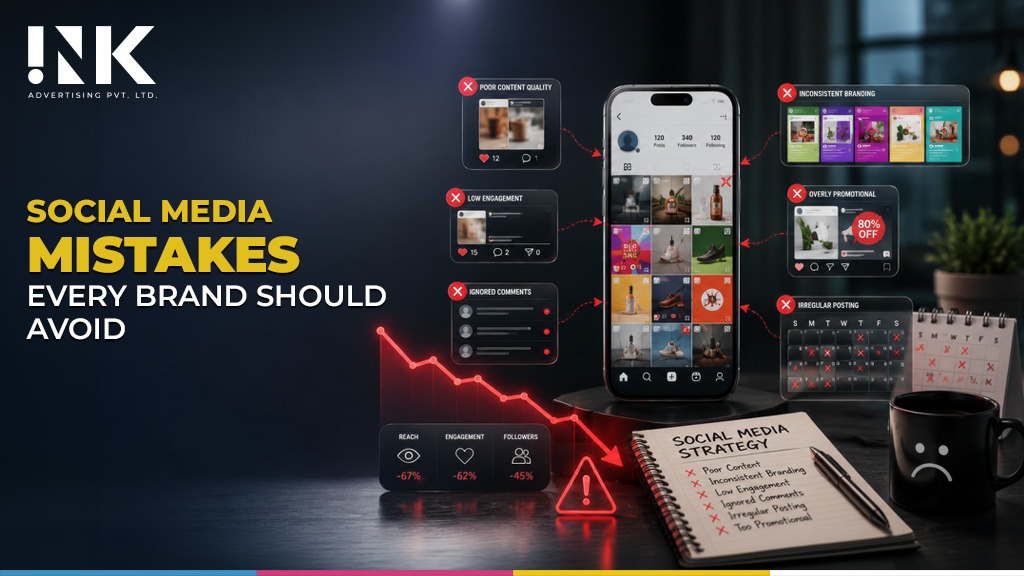
Social Media Mistakes Every Brand Should Avoid Before They Cost You Customers
Introduction Social media has become one of the most powerful marketing channels for businesses of every size. Whether you are a local business, an established enterprise, or a growing startup, your audience is spending hours every day on platforms like Instagram, Facebook, LinkedIn, and YouTube. While this creates endless opportunities to connect with potential customers, it also means competition has never been higher. Many brands invest in creating attractive graphics and posting regularly but still struggle to generate engagement, enquiries, or sales. In most cases, the problem is not the platform. It is the strategy behind the content. Understanding the social media mistakes every brand should avoid can help businesses create stronger relationships with their audience, improve brand visibility, and achieve measurable marketing results. Rather than chasing trends or focusing only on follower counts, successful brands build consistent strategies that support long term business growth. Why These Social Media Mistakes Matter Every post your business publishes contributes to how customers perceive your brand. An inconsistent posting schedule, poor quality content, or slow responses to customer queries can gradually reduce trust and limit your reach. Social media platforms also reward accounts that consistently provide value and encourage meaningful interactions. Brands that ignore strategy often find themselves spending more on advertising simply to achieve results that could have been earned organically through better planning. Avoiding common mistakes saves time, improves marketing efficiency, and helps businesses maximise the return on every piece of content they publish. Mistake 1: Posting Without a Clear Strategy One of the most common social media marketing mistakes is creating content without defining its purpose. Posting simply to remain active rarely delivers meaningful business results. Every piece of content should answer three important questions: Who is the audience? What business objective does this post support? What action should viewers take after seeing it? A successful content strategy balances educational, promotional, entertaining, and community driven content. Instead of treating every post as a standalone update, brands should ensure every piece contributes to a larger marketing objective. How to Fix It Build a monthly content calendar aligned with your business goals, seasonal campaigns, customer interests, and product launches. Planning ahead creates consistency while allowing room for trending topics when they genuinely fit your brand. Mistake 2: Treating Every Post Like an Advertisement Customers rarely follow brands because they want to see continuous sales messages. They follow businesses that educate them, inspire them, solve problems, or provide useful insights. When promotional content dominates your feed, engagement naturally begins to decline. Audiences quickly lose interest if every interaction feels like a sales pitch. Instead, share customer success stories, educational tips, behind the scenes content, industry updates, employee highlights, and frequently asked questions. Promotional posts become far more effective when they are supported by valuable everyday content. How to Fix It Aim for a healthy content mix where promotional posts are balanced with educational and relationship building content that encourages conversations rather than simply asking customers to buy. Mistake 3: Ignoring Audience Engagement Social media is designed for conversations, not one way communication. Brands that ignore comments, direct messages, reviews, or customer mentions often miss opportunities to build loyalty. Even worse, delayed responses can create the impression that customer experience is not a priority. Businesses that actively engage with their audience often develop stronger communities and higher customer trust. A thoughtful response to a question or complaint can leave a stronger impression than the original post itself. How to Fix It Allocate dedicated time each day to respond to comments, messages, and reviews. Consistent engagement demonstrates professionalism while helping improve platform visibility. Mistake 4: Chasing Every Trend Trending audio, viral memes, and popular challenges can increase visibility, but only when they align with your brand identity. Many businesses join trends simply because everyone else is doing so. While this may generate temporary attention, it often weakens brand consistency and confuses audiences about what the business actually represents. Every trend should support your messaging rather than distract from it. How to Fix It Before participating in a trend, ask whether it reflects your brand personality, provides value to your audience, and supports your marketing objectives. Mistake 5: Inconsistent Brand Identity Imagine visiting a company’s Instagram page, LinkedIn profile, and Facebook account only to find completely different messaging, colours, and tone of voice. Instead of building trust, this creates confusion. Consistency helps customers recognise and remember your business. From visual identity and captions to typography and messaging, every platform should reinforce the same brand personality while adapting content to suit each audience. How to Fix It Create clear brand guidelines for social media that define colours, fonts, tone of voice, logo usage, and messaging principles. Consistency strengthens brand recall and creates a more professional online presence. Mistake 6: Ignoring Analytics One of the biggest social media mistakes every brand should avoid is relying only on likes and follower counts to measure success. High reach means very little if it does not generate website visits, enquiries, or conversions. Businesses that never review performance data often continue investing in content that fails to deliver meaningful results. Important metrics include engagement rate, click through rate, website traffic, lead generation, audience retention, and conversions. How to Fix It Review performance every month and identify which content formats, posting times, and topics consistently perform best. Let data guide future content decisions instead of assumptions. Mistake 7: Posting Without a Content Calendar Last minute posting often leads to repetitive ideas, inconsistent quality, and missed opportunities around important campaigns or seasonal events. A structured content calendar helps marketing teams maintain consistency while ensuring every campaign supports broader business goals. Planning ahead also provides enough time to create better visuals, stronger copy, and more thoughtful campaigns. How to Fix It Develop monthly content calendars that include awareness content, educational posts, promotional campaigns, customer stories, and interactive content. This creates a balanced and sustainable publishing schedule. Mistake 8: Using the Same Content Across Every Platform Every social media platform serves a different purpose. LinkedIn


