

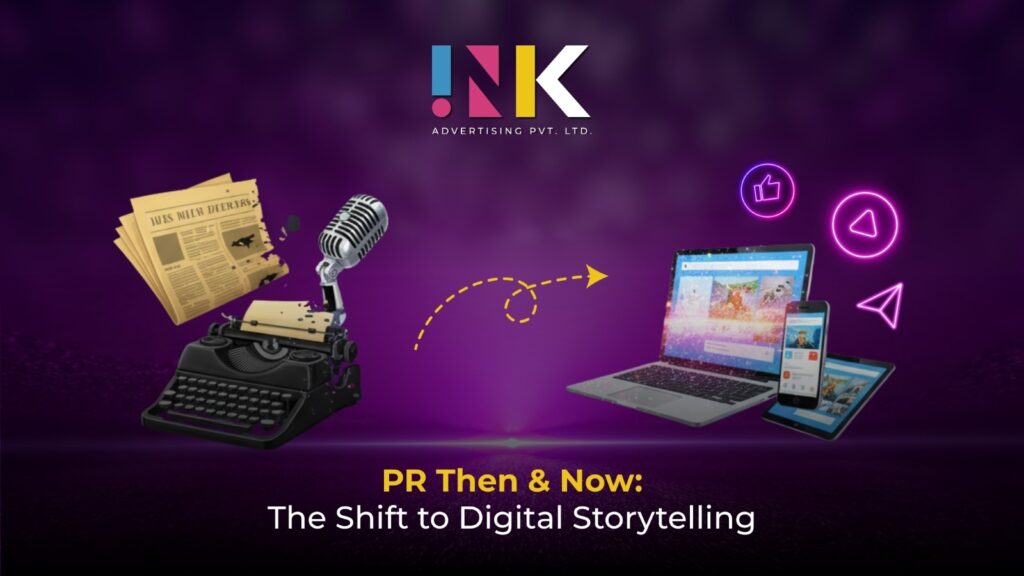
The Evolution of PR: From Press Releases to Digital Storytelling
Public Relations (PR) has always been about one thing: building and maintaining a brand’s reputation. Earlier, this meant sending out press releases, getting featured in newspapers, or holding grand public events. But today, PR has transformed into something much bigger: a two-way conversation where brands not only share their stories but also listen, engage, and respond.
From one-way announcements to interactive, multi-platform storytelling, PR has truly come a long way. In this blog, we’ll explore how PR has evolved, what modern strategies look like, and where the future of PR is heading.
The Era of Traditional PR
Public Relations, in its starting days, was straightforward and one-directional. Brands relied heavily on press releases, public speeches, and newspaper mentions to build credibility. Magazines provided more detailed narratives, highlighting leadership stories or company achievements. Back then, the goal was simple: carefully craft a message, share it with journalists, and hope it appeared in the next day’s edition.
As technology advanced, more channels joined the PR mix. Press and print media were considered the gold standard, with coverage in reputed newspapers or magazines seen as a mark of trust. Radio quickly became a household medium, using catchy jingles, sponsorships, and event mentions to reach a wide audience.
Later, television revolutionized PR, offering visual storytelling through interviews, brand features, and sponsored programs, though its high costs made it accessible mainly to established players. The defining characteristic of this traditional era was its one-way communication. Brands spoke, and the public listened.
While this approach was effective in building awareness, it lacked what modern PR values most: interaction and engagement. The audience could read, watch, or hear the message, but they had little scope to respond or participate in the conversation.
The Evolution Kickstart: Technology Reshapes PR
The late 90s and early 2000s marked a turning point in PR with the rise of the internet. PR was no longer limited to print or TV brands, built websites, shared email newsletters, and used online news portals to spread their stories.
This era also saw corporate social responsibility campaigns that lived online, showcasing brands as more socially aware and trustworthy. Most importantly, digital platforms allowed brands to publish directly, moving PR from simple announcements to meaningful brand conversations.
Key drivers of the Evolution
PR has evolved from being one-way communication to a dynamic, two-way exchange. In today’s digital-first world, brands don’t just talk to audiences, they talk with them. This shift has been made possible through advanced tools, analytics, and interactive platforms.
Let’s see how:
● Digital Media as Conversation Starters – Social platforms, blogs, YouTube, and podcasts aren’t just broadcast channels anymore. They allow instant feedback, comments, and real-time discussions, making engagement measurable and authentic.
● Influencer Collaborations with Data-Driven Focus – Instead of relying only on celebrity power, brands now work with micro and macro influencers. With AI and analytics, PR teams can track clicks, conversions, and audience sentiment, turning influencer marketing into a data-backed conversation.
● Radio in the Modern Age – Radio has adapted to the digital world. Stations like Mirchi, Red FM, and Fever FM use interactive formats where RJs act like influencers. On-air contests are synced with Instagram polls or YouTube live sessions, creating a loop of engagement across channels.
● Storytelling + Customer-Centric PR – Modern PR is built around storytelling
that feels authentic, but it’s also deeply customer-focused. Analytics reveal what
audiences want, brands tailor stories accordingly, and feedback loops make people
feel heard, making PR truly interactive.
Due to this evolution, the demand for digital PR services in Delhi NCR and other major cities has grown, helping brands run campaigns that reach audiences seamlessly across platforms.
The Rise of Digital Storytelling
The hottest trend in PR today is digital storytelling. Instead of plain announcements, brands now create engaging, relatable, and shareable stories.
- Instagram reels, X (Twitter) trends, and LinkedIn thought leadership posts are leading the way.
- Visual content and short-form videos dominate attention spans.
- Example of how product launches have shifted. Earlier, it was about a press note in a newspaper. Now, it’s about creating a buzz with teasers, influencer reviews, viral videos, and behind-the-scenes content. The goal is to make the audience feel part of the story rather than just listeners.
This is where social media PR campaigns truly shine, making brands more human and approachable.
Traditional + Modern PR = Integrated PR
In today’s landscape, it’s no longer about choosing between traditional and digital PR; it’s about blending both. A strong campaign could include a press release for credibility, radio for reach, and Instagram for engagement.
Integrated PR makes sure the brand is present wherever the audience is. It combines the trust of traditional media with the speed and creativity of digital platforms, creating a stronger impact.
For example, when Zomato launched its IPO, it didn’t rely only on financial press releases. It also used witty social media, influencer chatter, and TV coverage to create massive buzz, making the campaign truly unforgettable.
What is the Future of PR?
The future of PR looks promising, innovative, and deeply technology-driven. Some upcoming trends include:
- AI-Powered PR – Chatbots, sentiment analysis, and predictive tools will help brands manage reputation in real time.
- AR & VR Experiences – Imagine attending a product launch in virtual reality or interacting with a brand story in 3D. This is where PR is heading.
- Data-Driven Campaigns – Personalized communication based on consumer insights will make PR strategies sharper.
- Rise of Audio Platforms – Podcasts, interactive radio, and voice-based campaigns are growing rapidly as people consume more audio content.
As these modern public relations strategies evolve, the focus will remain on making brand communication more human, immersive, and personalized.
Conclusion
PR has evolved from simple press releases to dynamic, digital-first storytelling. While traditional tools like radio, print, and TV still matter, they now work best when integrated with digital platforms.
The future belongs to brands that embrace this integrated approach, blending credibility with creativity. And that’s why many companies today partner with the top public relations firms in Delhi, like INK Advertising Pvt. Ltd., to ensure their story isn’t just heard, but remembered. In the end, PR is no longer just about what you say; it’s about how your audience feels your story.


